

Speaking of Science: News from the Oberlin College Science Library
Thursday, January 22, 2015
Even Snow Creatures Want to Read


Thursday, January 15, 2015
Student and Faculty publications in Neuroscience and Geology
New publications from Oberlin students and faculty, as indexed in Web of Science:
Leslie, William R. (OC’15), Kristopher B. Karnauskas, and Jan H. Witting. 2014. The equatorial undercurrent and TAO sampling bias from a decade at SEA (vol 31, pg 2015, 2014). Journal of Atmospheric and Oceanic Technology 31 (12) (DEC): 2871-. [Oberlin users, access this through JournalFinder]
Goldfarb, Stephanie; Naomi E. Leonard; Patrick Simen, Assistant Professor Neuroscience; Carlos H. Caicedo-Nunez; and Philip Holmes. 2014. A comparative study of dift diffusion and linear ballistic accumulator models in a reward maximization perceptual choice task. Frontiers in Neuroscience 8 (AUG 5): 148.
Karsilar, Hakan; Patrick Simen, Assistant Professor Neuroscience; Samantha Papadakis (OC’15); and Fuat Balci. 2014. Speed accuracy trade-off under response deadlines. Frontiers in Neuroscience 8 (AUG 15): 248.
Leslie, William R. (OC’15), Kristopher B. Karnauskas, and Jan H. Witting. 2014. The equatorial undercurrent and TAO sampling bias from a decade at SEA (vol 31, pg 2015, 2014). Journal of Atmospheric and Oceanic Technology 31 (12) (DEC): 2871-. [Oberlin users, access this through JournalFinder]
Goldfarb, Stephanie; Naomi E. Leonard; Patrick Simen, Assistant Professor Neuroscience; Carlos H. Caicedo-Nunez; and Philip Holmes. 2014. A comparative study of dift diffusion and linear ballistic accumulator models in a reward maximization perceptual choice task. Frontiers in Neuroscience 8 (AUG 5): 148.
Karsilar, Hakan; Patrick Simen, Assistant Professor Neuroscience; Samantha Papadakis (OC’15); and Fuat Balci. 2014. Speed accuracy trade-off under response deadlines. Frontiers in Neuroscience 8 (AUG 15): 248.
"Frontiers is a community-oriented open-access academic publisher and research network." About Frontiers.
Friday, January 09, 2015
Open Access article: Elrod, et al., on organic aerosol components.
A new publication from the Elrod laboratory, as indexed in Web of Science:
 |
| atmospheric-chemistry-and-physics.net/ |
Birdsall, Adam W. ’14; Miner, Corina R. ’15; Mael, Liora E. ’16; Elrod, Matthew J., Professor of Chemistry.
Mechanistic study of secondary organic aerosol components formed from nucleophilic addition reactions of methacrylic acid epoxide.
ATMOSPHERIC CHEMISTRY AND PHYSICS, 14 (23):12951-12964; 2014. www.atmos-chem-phys.net/14/12951/2014/ Open access
Saturday, December 13, 2014
Misuse of "study drugs" can be harmful
In the media, there are many reports of college students
misusing prescription drugs to enhance their ability to study; see, for example, WebMD, CNN and the New York Times.
As we move into finals week, some readers may be planning on using study drugs to help their grades. For these readers I want you to understand how these drugs affect your body and why you may want to refrain from using them if you have other medical conditions. Whether you plan on using study drugs or not, I hope that you find this information interesting and that you will be able to use some of the Science Library’s resources to learn more about them.
_structure.png) |
| Structure of Amphetamine (Adderall) Source: Wikimedia Commons |
What are study drugs?
Study drugs are substances taken to increase mental functions such as attention, concentration, alertness, memory, motivation, planning, and decision-making. The most widely used are stimulants such as methylphenidate (Ritalin, Concerta), amphetamine (Adderall), and modafinil (Provigil). These medications are widely prescribed because they are useful for controlling symptoms of attention deficit hyperactivity disorder (ADHD) (methylphenidate, amphetamine) or excessive daytime sleepiness associated with narcolepsy and other sleep disorders (modafinil, amphetamine, methylphenidate). (1)
In the last two decades, there has been a dramatic increase in stimulant prescriptions, probably due to increased awareness and diagnosis of these disorders. This has led to greater availability of these drugs for people that were not prescribed them. (2)
How do they act?
They act similarly to a family of key brain neurotransmitters called monoamines, which include norepinephrine and dopamine, by enhancing their effects. The increase in their effects can induce a feeling of euphoria when stimulants are taken nonmedically. This can lead to addiction and abuse of these drugs. (2)
Stimulants also increase the action of the sympathetic nervous system; increasing blood pressure and heart rate, constricting blood vessels, increasing blood glucose, and opening up breathing passages. (2)
Problems with study drugs:
Stimulants increase alertness, attention, and energy, as well as elevate blood pressure, heart rate, and respiration. However, withdrawal can result in symptoms that are opposite to the positive effects, including fatigue, depression, and disturbed sleep. Abuse of stimulants can lead to feelings of hostility, paranoia, and psychosis. High doses can result in dangerously high body temperature and irregular heartbeat as well. Additionally, there is the potential for cardiovascular failure or seizures with abuse of stimulants. (1)
Study drugs can interact with other medications you are taking or with pre-existing medical conditions. Do not mix stimulants and over the counter cold medicines that contain decongestants, because combining these substances can cause dangerously high blood pressure or irregular heart rhythms. (2) If you are getting sick during finals week and taking medicine, you should avoid taking stimulants.
Do not use stimulants like Adderall if you have glaucoma, severe anxiety, heart problems, or a family history of muscles twitches or Tourette’s syndrome. You should also avoid using them if you have taken a monoamine oxidase (MAO) inhibitor in the past two weeks because a dangerous drug interaction could occur. MAO inhibitors include isocarboxazid, linezolid, phenelzine, rasagiline, selegiline, and tranylcypromine (3).
Additionally, there is limited and inconsistent evidence to support the pro-cognitive effects of these drugs in healthy, non-sleep-deprived individuals, though they are often perceived that way by those who are taking them (4).
If you want to know more:
Search SciFinder, PubMed, or Web of Science; try keywords such as nootropics, amphetamines, academic doping or cognitive enhancing drugs. You may want to start by filtering for reviews. If you want a more general overview, try a subject search in OBIS on substance abuse. Here are two useful reference sources:
Psychopharmacology : drugs, the brain, and behavior, 2nd ed / Jerrold S. Meyer, Linda F. Quenzer
Sunderland, Mass. : Sinauer Associates, c2013
If you want assistance, come to the science library reference desk and we can help you search.
Sources:
- Steiner H., Van Waes V. Addiction-related gene regulation: risks of exposure to cognitive enhancers vs. other psychostimulants. Prog Neurobiol. 2013 Jan;100:60-80. doi: 10.1016/j.pneurobio.2012.10.001. Epub 2012 Oct 17.
- http://www.drugabuse.gov/publications/research-reports/prescription-drugs/stimulants
- http://www.drugs.com/adderall.html
- Hildt E, Lieb K, Franke AG. Life context of pharmacological academic performance enhancement among university students – a qualitative approach.BMC Medical Ethics 2014;15:23. doi:10.1186/1472-6939-15-23.
Contributed by James Medina, Science Library Student Reference Assistant
Friday, December 05, 2014
All About Caffeine
Finals are coming up soon! How much do you know about how all that coffee you’re drinking is affecting your body?
What is caffeine?
Caffeine is a bitter white crystalline alkaloid that acts as stimulant and a mild diuretic. It is found in the beans, leaves, and fruits of more than 60 plants. In these tissues it serves as a pesticide, killing or paralyzing insects that feed on them.(2)
 |
| commons.wikimedia.org |

Where does it come from?
Major sources of caffeine for human consumption come from coffee, tea, and cocoa. Guarana, kola nuts, and yerba mate are also cultivated for use as sources of caffeine in energy drinks and snacks.(2)
Who consumes caffeine and how much do they have?
Caffeine is the most widely consumed stimulant in the world. Adults in the US consume an average of about 300 mg of caffeine a day, and 80% of adults in the US consume caffeine in the form of coffee or tea on a daily basis.(2) 97% of the total caffeine consumed comes from beverages, and coffee accounts for the majority of these beverages.(4) An average adult in the US consumes about 3.3 9oz cups of coffee per day.(1)
What does it do?
Average doses (85-250 mg, the equivalent of 1-3 cups of coffee) can result in feelings of alertness, decreased fatigue, and eased flow of thought. High doses (250-500 mg) can result in restlessness, nervousness, insomnia, and tremors.(3)
At very high doses, caffeine can cause seizures and cardiovascular instability. Overdosing on caffeine is difficult because a fatal dose in adults, 10g, is over 20x what most people consume in a day.(3) With that in mind, the FDA still recommends that the average daily intake of caffeine for adults should be less than 500 mg per day.(2)
How quickly does it act, and for how long?
After being ingested, caffeine is rapidly absorbed. It is detectable in the blood after only 5 minutes and reaches its peak levels after 30-60 minutes. The half life varies from person to person, but generally is about 5-8 hours, meaning that in 5-8 hours only half the caffeine you ingested will remain in your system. If you are a tobacco smoker however, it is cleared from your body more quickly.(3)
How does it work?
The nucleoside adenosine plays many roles in your body, one of which is to promote sleep and suppress wakefulness.(3) Caffeine acts as an adenosine antagonist, binding to adenosine receptors and preventing adenosine from binding to the receptor.(5) This results in the opposite action of adenosine, causing your blood vessels to dilate and your central nervous system to be stimulated.(3)
Caffeine also induces the release of signaling molecules such as norepinephrine and epinephrine, increasing heart rate and blood vessel dilation, as well as increasing oxygen absorbance at the lungs. It can also induce a number of metabolic changes, increasing blood sugar and blood filtration at the kidney. It also increases the amount of acid in your stomach and increases the movement of food through your digestive tract.(3)
How can this help you as a student?
Doses of caffeine over 100mg reliably produce beneficial effects for reaction time, sustained attention tasks, alertness, mood, and wakefulness. Additionally, glucose has synergistic effects with caffeine, benefiting sustained attention and verbal memory.(6)
Chronic low doses of caffeine have been shown to prevent learning and memory impairment in animal models of Alzheimer’s disease.(5) However, this has not yet been reported in humans.
If you want to know more:
 Search SciFinder, PubMed, or Web of Science for information about caffeine; you may want to start by filtering for reviews. If you want a more general overview, try a subject search in OBIS on caffeine. If you want assistance, come to the science library reference desk and we can help you search. Here are a few recommended titles:
- The world of caffeine : the science and culture of the world's most popular drug / Bennett Alan Weinberg, Bonnie K. Bealer
- Coffee, tea, chocolate, and the brain / edited by Astrid Nehlig
- Buzz : the science and lore of alcohol and caffeine / Stephen Braun
- Caffeine and health research / Kenneth P. Chambers, editor
Sources:
- National Coffee Drinking Trends 2010, National Coffee Association
- Food and Drug Administration 2010 Caffeine Report
- http://emedicine.medscape.com/article/821863-overview#a0101
- Laszlo SP. Caffeine Intake By the U.S. Population. US Food and Drug Administration.
- J Alzheimers Dis. 2010;20 Suppl 1:S3-15. doi: 10.3233/JAD-2010-1379. Caffeine and adenosine. Ribeiro JA(1), Sebastião AM.
- Hum Psychopharmacol. 2010 Jun-Jul;25(4):310-7. doi: 10.1002/hup.1115. Effects of caffeine and glucose, alone and combined, on cognitive performance. Adan A(1), Serra-Grabulosa JM.
Contributed by: James Medina, Science Library Student Reference Assistant
Monday, December 01, 2014
What do you know about Ebola?
The most
recent Ebola outbreak has gained international attention and aroused much fear
due to the severity and ease of contraction of the virus. The infection and mortality rates in Liberia,
Guinea, and Sierra Leone are startlingly high and have caused immense stress
not only on the health care system but also on the social and economic health
of the countries.
 |
| Ebola virus graphic, courtesy of the Center for Disease Control |
The primary indications of contraction are similar to other diseases: fever, headache, and muscle pain; in later stages vomiting, stomach pain, and unexpected bleeding and bruising are common. The basic screening method is fever detection, but the accuracy is not reliable because the onset of symptoms after infection is anywhere between 2 and 21 days. Because of the delayed onset and the tendency for people to lie about their activities and whereabouts during a trip to a country with high prevalence of the virus, airport screenings have been minimally effective in preventing the spread of Ebola to other countries.
Prevention is as simple as avoiding contact with infected people and spaces, but this can prove to be incredibly difficult when the prevalence is high and people do not know they are infected. This also causes stigma against people who were infected and have recovered; family, friends, and neighbors do not want to come into contact with them.
Fear of contraction has also led to economic disruption: people are not leaving their homes to work or purchase goods, which has severely affected the national economies in Guinea, Liberia, and Sierra Leone. In addition, closed borders and abandoned farms are driving up food costs, limiting access to food for people in rural areas in particular and leading to potential starvation. Exports have also been largely halted, adding stress to the depletion of the economy by the priority for emergency funding.
The educational systems have also been severely affected; schools have been closed, compounding an already stressed system especially for girls who only more recently started attending school. Further delay of progress may lead to even higher dropout rates and may cause literacy rates to decline.
Despite the widespread and disastrous effects of Ebola, a vaccine is still in the developing phases. It has taken a “crisis”, and one that affects many more countries, to push scientists and their financial supporters to explore drugs and vaccines for the virus.
International aid has been steady since the outbreak became serious, but it raises many concerns. By sending money and doctors, foreigners are upholding the power dynamic already present in the post-colonial (neocolonial) countries. While aid is necessary to support the limited resources of the affected countries health care systems, Western medicine is upheld as superior and essential for progress.
Contributed by: Carmen Azevedo, Science Library Student Reference Assistant
Resources
Black holes, Nanoparticles, Cocrystal formation, and Phylogenetic signals: new publications from Oberlin authors
Names of Oberlin faculty and students are indicated in bold text:
Arzoumanian, Z., A. Brazier, S. Burke-Spolaor, S. J. Chamberlin, S. Chatterjee, J. M. Cordes, P. B. Demorest, et al., including Daniel R. Stinebring, Professor of Physics. 2014. Gravitational waves from individual supermassive black hole binaries in circular orbits: Limits from the North American Nanohertz Observatory for gravitational waves. Astrophysical Journal 794 (2) (OCT 20): 141. [access at iopscience.com]
Krycka, K. L., J. A. Borchers, R. A. Booth, Yumi Ijiri, Professor of Physics, K. Hasz, J. J. Rhyne, and S. A. Majetich. 2014. Origin of surface canting within Fe3O4 nanoparticles. Physical Review Letters 113 (14) (OCT 2): 147203. [access at aps.org]
Mandala, Venkata S., OC '15, Sarel J. Loewus, OC '16, and Manish A. Mehta, Professor of Chemistry. 2014. Monitoring cocrystal formation via in situ solid-state NMR. Journal of Physical Chemistry Letters 5 (19) (OCT 2): 3340-4. [access at pubs.acs.com]
Straub, Shannon C. K., Michael J. Moore, Associate Professor of Biology, Pamela S. Soltis, Douglas E. Soltis, Aaron Liston, and Tatyana Livshultz. 2014. Phylogenetic signal detection from an ancient rapid radiation: Effects of noise reduction, long-branch attraction, and model selection in crown clade apocynaceae. Molecular Phylogenetics and Evolution 80 (NOV): 169-85. [access at sciencedirect.com]
Arzoumanian, Z., A. Brazier, S. Burke-Spolaor, S. J. Chamberlin, S. Chatterjee, J. M. Cordes, P. B. Demorest, et al., including Daniel R. Stinebring, Professor of Physics. 2014. Gravitational waves from individual supermassive black hole binaries in circular orbits: Limits from the North American Nanohertz Observatory for gravitational waves. Astrophysical Journal 794 (2) (OCT 20): 141. [access at iopscience.com]
 |
| Astrophysical Journal 794 (2), fig. 6 |
Krycka, K. L., J. A. Borchers, R. A. Booth, Yumi Ijiri, Professor of Physics, K. Hasz, J. J. Rhyne, and S. A. Majetich. 2014. Origin of surface canting within Fe3O4 nanoparticles. Physical Review Letters 113 (14) (OCT 2): 147203. [access at aps.org]
Mandala, Venkata S., OC '15, Sarel J. Loewus, OC '16, and Manish A. Mehta, Professor of Chemistry. 2014. Monitoring cocrystal formation via in situ solid-state NMR. Journal of Physical Chemistry Letters 5 (19) (OCT 2): 3340-4. [access at pubs.acs.com]
Straub, Shannon C. K., Michael J. Moore, Associate Professor of Biology, Pamela S. Soltis, Douglas E. Soltis, Aaron Liston, and Tatyana Livshultz. 2014. Phylogenetic signal detection from an ancient rapid radiation: Effects of noise reduction, long-branch attraction, and model selection in crown clade apocynaceae. Molecular Phylogenetics and Evolution 80 (NOV): 169-85. [access at sciencedirect.com]
Wednesday, November 12, 2014
Neuroprosthetics featured in The Scientist
From The Scientist:
Neuroprosthetics a fascinating look at advances in devices that "supplant or supplement the input and/or output of the nervous system."
By Eric C. Leuthardt, Jarod L. Roland and Wilson Z. Ray

Operative neuromodulation / edited by D.E. Sakas, B.A. Simpson, and E.S. Krames. Springer, c2007.
Springer handbook of medical technology / edited by Rüdiger Kramme, Klaus-Peter Hoffmann, Robert S. Pozos. Springer, c2011
Browse the contents of this journal in the OhioLINK EJC for a more extensive reading of these exciting developments:
Neuromodulation: Technology at the Neural Interface
By Eric C. Leuthardt, Jarod L. Roland and Wilson Z. Ray
"For decades, researchers have eyed neuroprosthetics as ways to bypass neural deficits caused by disease, or even to augment existing function for improved performance. Today, several different types of surgical brain implants are being tested for their ability to restore some level of function in patients with severe sensory or motor disabilities."Two books accessible in the Springer electronic book collection provide context and background:

Operative neuromodulation / edited by D.E. Sakas, B.A. Simpson, and E.S. Krames. Springer, c2007.
Springer handbook of medical technology / edited by Rüdiger Kramme, Klaus-Peter Hoffmann, Robert S. Pozos. Springer, c2011
Browse the contents of this journal in the OhioLINK EJC for a more extensive reading of these exciting developments:
Neuromodulation: Technology at the Neural Interface
Friday, October 31, 2014
Genetics and age contribute to Ebola infection outcome
Fascinating story on NPR's Morning Edition today, featuring remarks from:
Rasmussen and colleagues published research results in Science showing a “wide range of disease outcomes, all the way from mild to severe illness” depending on the genetic makeup of mice infected with the same Ebola virus strain.
Garry is part of a team studying age of patients suffering from Ebola; younger patients (under age 21) were significantly more likely to survive than patients older than 45 (published in New England Journal of Medicine).
Listen to the whole story.
More information at The Scientist.
- Vincent Racaniello, virologist at Columbia University,
- Jonathan Epstein, veterinarian and epidemiologist with EcoHealth Alliance,
- Angela Rasmussen, microbiologist at the University of Washington in Seattle, and
- Robert Garry, microbiologist at Tulane University.
Rasmussen and colleagues published research results in Science showing a “wide range of disease outcomes, all the way from mild to severe illness” depending on the genetic makeup of mice infected with the same Ebola virus strain.
Garry is part of a team studying age of patients suffering from Ebola; younger patients (under age 21) were significantly more likely to survive than patients older than 45 (published in New England Journal of Medicine).
Listen to the whole story.
More information at The Scientist.
Thursday, October 30, 2014
NTIS Expands Free Access to Federal Technical Reports
From a news release, Oct. 28, 2014:
 "The National Technical Reports Library (NTRL) is now offering the American public free public access to a searchable online database of approximately three million federal science and technology reports. The library is a service of the U.S. Commerce Department’s National Technical Information Service. NTIS, a federal agency that does not receive appropriations from Congress, previously charged a fee to provide full-text electronic copies of federal documents in its collection. The full text for 800,000 of these documents can be downloaded immediately in electronic PDF format without charge." more...
"The National Technical Reports Library (NTRL) is now offering the American public free public access to a searchable online database of approximately three million federal science and technology reports. The library is a service of the U.S. Commerce Department’s National Technical Information Service. NTIS, a federal agency that does not receive appropriations from Congress, previously charged a fee to provide full-text electronic copies of federal documents in its collection. The full text for 800,000 of these documents can be downloaded immediately in electronic PDF format without charge." more...PLoS ONE paper demonstrates "ubiquity" of DNA contamination
From The Scientist:
A dissertation from Kent State University (Attarhaie Tehrani 2011) in the OhioLINK Electronic Thesis and Dissertation Center discusses similar challenges for eliminating DNA contamination in research protocols. Read the dissertation abstract in OhioLINK library catalog.
Learn more about methods involved with a next-generation sequencer:
Pompanon, François, and Bonin, Aurélie, editors
Data Production and Analysis in Population Genomics : Methods and Protocols. Humana Press, 2012. In the OhioLINK Electronic Book Center.
Explore much more about genomics in the journal with that title, at sciencedirect.com: Genomics and find a plethora of books on the topic in OBIS and OhioLINK catalogs.
Fact or Artifact? "A study documenting the ubiquity of DNA contamination calls into question a recent paper on food-derived nucleic acids in the human bloodstream. DNA from diverse species—including bacteria, plants, and humans—contaminates nearly every sample sent through a next-generation sequencer, according to a study published today (October 29) in PLOS ONE."
 |
| Science Library: QH447.D83 2013 |
Learn more about methods involved with a next-generation sequencer:
Pompanon, François, and Bonin, Aurélie, editors
Data Production and Analysis in Population Genomics : Methods and Protocols. Humana Press, 2012. In the OhioLINK Electronic Book Center.
Explore much more about genomics in the journal with that title, at sciencedirect.com: Genomics and find a plethora of books on the topic in OBIS and OhioLINK catalogs.
Monday, October 20, 2014
Open Access Week Greetings
Celebrate Open Access! See #OAWeek2014 for a lively collection of greetings and enticements from publishers, journal producers, associations and individuals.
In a news release today, Springer tells us that "with 160+ fully open journals, a growing selection of fully open eBooks, and thousands of articles available through our Open Choice program—along with the entire BioMedCentral catalog—Springer is one of the largest OA publishers in the world." More...
 |
| International Open Access Week |
And, from the Journal of Applied Ecology: "to coincide with the 7th Annual International Open Access Week we are delighted to bring together all open access papers published in the Journal of Applied Ecology in 2014. All five British Ecological Society Journals have produced a Virtual Issue for Open Access Week 2014."
Check out the How Open Is It? guide from PLOS, the Public Library of Science, to better evaluate the open access status of any journal of publisher. While you're there, enjoy access to the entire suite of PLOS journals and websites.
Thursday, October 16, 2014
Phylogeographic research published by Michael Moore
A recent faculty paper as indexed in Web of Science:
Sun, Yanxia, Michael J. Moore, Associate Professor of Biology, Liangliang Yue, Tao Feng, Haijia Chu, Shaotian Chen, Yunheng Ji, Hengchang Wang, and Jianqiang Li. 2014. "Chloroplast Phylogeography of the East Asian Arcto-Tertiary Relict Tetracentron Sinense (Trochodendraceae)." Journal of Biogeography 41 (9): 1721-1732. doi:10.1111/jbi.12323. [subscriber access only]

Partial abstract: "A phylogeographical study of the widespread but phylogenetically isolated East Asian endemic tree species Tetracentron sinense (Trochodendraceae) was performed to evaluate whether and how Pleistocene and pre-Pleistocene climate changes helped to influence current phylogeographical patterns, and to describe the current patterns of genetic diversity and their implications for conservation. [Research findings suggest:] The extant distribution of T. sinense is likely to have been shaped by both pre-Quaternary and Pleistocene climate changes. Southwestern China may have served as an important refugium for T. sinense throughout the Neogene, while the species also occupied multiple refugia during the late Pleistocene glacial periods. Populations of T. sinense were resolved into five allopatric groups, between which there is apparently no seed movement."
Sun, Yanxia, Michael J. Moore, Associate Professor of Biology, Liangliang Yue, Tao Feng, Haijia Chu, Shaotian Chen, Yunheng Ji, Hengchang Wang, and Jianqiang Li. 2014. "Chloroplast Phylogeography of the East Asian Arcto-Tertiary Relict Tetracentron Sinense (Trochodendraceae)." Journal of Biogeography 41 (9): 1721-1732. doi:10.1111/jbi.12323. [subscriber access only]
Partial abstract: "A phylogeographical study of the widespread but phylogenetically isolated East Asian endemic tree species Tetracentron sinense (Trochodendraceae) was performed to evaluate whether and how Pleistocene and pre-Pleistocene climate changes helped to influence current phylogeographical patterns, and to describe the current patterns of genetic diversity and their implications for conservation. [Research findings suggest:] The extant distribution of T. sinense is likely to have been shaped by both pre-Quaternary and Pleistocene climate changes. Southwestern China may have served as an important refugium for T. sinense throughout the Neogene, while the species also occupied multiple refugia during the late Pleistocene glacial periods. Populations of T. sinense were resolved into five allopatric groups, between which there is apparently no seed movement."
Thursday, October 09, 2014
The Nobel Prize in Chemistry: magnifying teeny tiny objects
The Nobel Prize in Chemistry 2014 - Official Nobel Prize site.
Highly recommended: How the optical microscope became a nanoscope (Nobel Prize "popular information")
----
As reported by Inside Science News Service:
By Chris Gorski, Senior Editor
Oct. 8, 2014
(Inside Science) – The 2014 Nobel Prize in chemistry has been awarded to an American neuroscientist, a German biochemist and an American chemist "for the development of super-resolved fluorescence microscopy."
The prize goes jointly to Eric Betzig, from the Howard Hughes Medical Center in Ashburn, Virginia, Stefan W. Hell, from the Max Planck Institute for Biophysical Chemistry, in Göttingen, Germany, and William E. Moerner, from Stanford University in Stanford, California.
"What this year's prize is about is beating the diffraction limit of light," said Trisha Andrew, a chemist at the University of Wisconsin-Madison. "You can actually image directly very, very small features that are below the resolution of the visible light that everyone uses."
Hell has used [these techniques] to investigate living nerve cells. Moerner studied Huntington's disease with the techniques. Betzig watched cell division within embryos.
Highly recommended: How the optical microscope became a nanoscope (Nobel Prize "popular information")
----
As reported by Inside Science News Service:
By Chris Gorski, Senior Editor
Oct. 8, 2014
(Inside Science) – The 2014 Nobel Prize in chemistry has been awarded to an American neuroscientist, a German biochemist and an American chemist "for the development of super-resolved fluorescence microscopy."
The prize goes jointly to Eric Betzig, from the Howard Hughes Medical Center in Ashburn, Virginia, Stefan W. Hell, from the Max Planck Institute for Biophysical Chemistry, in Göttingen, Germany, and William E. Moerner, from Stanford University in Stanford, California.
"What this year's prize is about is beating the diffraction limit of light," said Trisha Andrew, a chemist at the University of Wisconsin-Madison. "You can actually image directly very, very small features that are below the resolution of the visible light that everyone uses."
Hell has used [these techniques] to investigate living nerve cells. Moerner studied Huntington's disease with the techniques. Betzig watched cell division within embryos.
----
All of the preceding text is from Chris Gorski's article in Inside Science News Service. Read the whole piece for deeper insight.
Tuesday, October 07, 2014
Inventors of Blue LEDs win Nobel Prize in Physics
From Inside Science News Service:
The Nobel Prize news release highlights the significance of their achievement, succeeding "where everyone else had failed," to transform how the world uses electricity for lighting. Ultimately, the switch from incandescent or fluorescent to LED means enormous savings in energy, decreased consumption of manufacturing materials, and improving "the quality of life for over 1.5 billion people around the world who lack access to electricity grids: due to low power requirements it can be powered by cheap local solar power." Pretty remarkable for a tiny light bulb.
"The 2014 Nobel Prize in Physics has been awarded to two Japanese and one U.S. citizen, all born in Japan, 'for the invention of efficient blue light-emitting diodes which has enabled bright and energy-saving white light sources.'
"The prize goes jointly to Isamu Akasaki of Meijo University in Nagoya, Japan, Hiroshi Amano of Nagoya University in Japan, and Shuji Nakamura of the University of California, Santa Barbara. Starting in the 1990s they produced blue LEDs, an energy-efficient, environmentally friendly source of blue light, which could be mixed with LEDs of other colors to produce a mixture that the eye sees as white light."
 |
| Philips SlipStyle; mashable.com |
Monday, October 06, 2014
Nobel Prize Week Begins: 3 Share Prize for Physiology or Medicine
As heard on NPR's Morning Edition, three neuroscientists have been awarded the 2014 Nobel Prize in Physiology or Medicine, with one half to John O´Keefe and the other half jointly to May-Britt Moser and Edvard I. Moser for their discoveries of cells that constitute a positioning system in the brain.
Two key papers, accessible to subscribers:
"The discoveries of John O´Keefe, May-Britt Moser and Edvard Moser have solved a problem that has occupied philosophers and scientists for centuries – how does the brain create a map of the space surrounding us and how can we navigate our way through a complex environment?"
Their findings have implications for Alzheimer's research, and "represent a paradigm shift in our understanding of how ensembles of specialized cells work together to execute higher cognitive functions. It has opened new avenues for understanding other cognitive processes, such as memory, thinking and planning." [from today's announcement on Nobel Prize]
Two key papers, accessible to subscribers:
O'Keefe, J., and Dostrovsky, J. (1971). The hippocampus as a spatial map. Preliminary evidence from unit activity in the freely‐moving rat. Brain Research 34, 171-175. [access at science direct.com]
Fyhn, M., Molden, S., Witter, M.P., Moser, E.I., Moser, M.B. (2004) Spatial representation in the entorhinal cortex. Science 305, 1258-1264. [access at sciencemag.org]
Thursday, October 02, 2014
Letter from Dennis Hubbard published in Science
Dennis Hubbard, Professor of Geology, has published a letter with 13 other researchers from five different countries and five other states, disagreeing with assertions conveyed by science writer Christopher Pala (Science Aug. 1, p. 496). Pala interviewed scientists who implied that recent land losses from low-lying islands are the result of poor coastal management, and that islanders are being affected "for the same reason as millions of people on the continents: because they live too close to shore." Pala cited studies that imply that "coral reefs supporting sandy atoll islands will grow and rise in tandem with the sea." Hubbard and co-authors refute those findings in their letter Island outlook: Warm and swampy.
Authors:
Hubbard, Dennis; Gischler, Eberhard; Davies, Peter; Montaggioni, Lucien; Camoin, Gilbert; Dullo, Wolf-Christian; Storlazzi, Curt; Field, Michael; Fletcher, Charles; Grossman, Eric; Sheppard, Charles; Lescinsky, Halard; Fenner, Douglas; McManus, John; Scheffers, Sander.
Science, 345 (6203):1461-1461; SEP 19 2014 [access online for subscribers]
It is timely reading, following on the heels of the State of the Climate Debate held in Nancy Schrom Dye Lecture Hall yesterday evening.
Authors:
Hubbard, Dennis; Gischler, Eberhard; Davies, Peter; Montaggioni, Lucien; Camoin, Gilbert; Dullo, Wolf-Christian; Storlazzi, Curt; Field, Michael; Fletcher, Charles; Grossman, Eric; Sheppard, Charles; Lescinsky, Halard; Fenner, Douglas; McManus, John; Scheffers, Sander.
Science, 345 (6203):1461-1461; SEP 19 2014 [access online for subscribers]
It is timely reading, following on the heels of the State of the Climate Debate held in Nancy Schrom Dye Lecture Hall yesterday evening.
Friday, September 26, 2014
Ohio fracking waste disposal practices examined
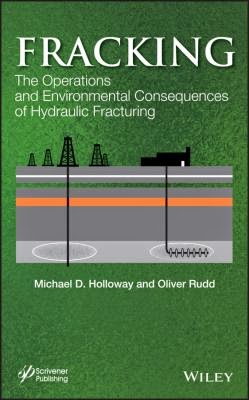 From EcoWatch, September 25, a discouraging note: "The Government Accountability Office (GAO) released a new report this week showing that Ohio was the only state among eight studied that allows waste fluids from oil and gas wells to be disposed of without disclosure of the chemicals it contains."
Some context is provided by this title from Wiley online: Fracking: the operations and environmental consequences of hydraulic fracturing / Michael D. Holloway and Oliver Rudd. 2014.
Thursday, September 25, 2014
New Publications from Craig, FitzGerald, Tarvin; co-authored with alumni
New publications from Oberlin faculty and recent grads (names indicated by bold font), as indexed in Web of Science:
 Craig, Norman C. (Professor Emeritus of Chemistry), Yihui Chen '13, Herman van Besien '11, and Thomas A. Blake. 2014. Analysis of the Rotational Structure in the High-Resolution Infrared Spectra of Trans-Hexatriene-2-D(1) and-3-D(1). Journal of Molecular Spectroscopy 303: 26-35. doi:10.1016/j.jms.2014.07.001. Subscriber access at sciencedirect.com
Kapelewski, Matthew T., Stephen J. Geier, Matthew R. Hudson, David Stueck, Jarad A. Mason, Jocienne N. Nelson '14, Dianne J. Xiao, Elizabeth Gilmour (Physics instructor), Stephen A. FitzGerald (Professor of Physics), et al. 2014. M-2(M-Dobdc) (M = mg, Mn, Fe, Co, Ni) Metal-Organic Frameworks Exhibiting Increased Charge Density and Enhanced H-2 Binding at the Open Metal Sites. Journal of the American Chemical Society 136 (34): 12119-12129. Subscriber access at pubs.acs.org
Lumpkin, David C. '13, Troy G. Murphy, and Keith A. Tarvin (Professor of Biology). 2014. Blood Parasite Infection Differentially Relates to Carotenoid-Based Plumage and Bill Color in the American Goldfinch. Ecology and Evolution 4 (16): 3210-3217. Open access at onlinelibrary.wiley.
Craig, Norman C. (Professor Emeritus of Chemistry), Yihui Chen '13, Herman van Besien '11, and Thomas A. Blake. 2014. Analysis of the Rotational Structure in the High-Resolution Infrared Spectra of Trans-Hexatriene-2-D(1) and-3-D(1). Journal of Molecular Spectroscopy 303: 26-35. doi:10.1016/j.jms.2014.07.001. Subscriber access at sciencedirect.comKapelewski, Matthew T., Stephen J. Geier, Matthew R. Hudson, David Stueck, Jarad A. Mason, Jocienne N. Nelson '14, Dianne J. Xiao, Elizabeth Gilmour (Physics instructor), Stephen A. FitzGerald (Professor of Physics), et al. 2014. M-2(M-Dobdc) (M = mg, Mn, Fe, Co, Ni) Metal-Organic Frameworks Exhibiting Increased Charge Density and Enhanced H-2 Binding at the Open Metal Sites. Journal of the American Chemical Society 136 (34): 12119-12129. Subscriber access at pubs.acs.org
Lumpkin, David C. '13, Troy G. Murphy, and Keith A. Tarvin (Professor of Biology). 2014. Blood Parasite Infection Differentially Relates to Carotenoid-Based Plumage and Bill Color in the American Goldfinch. Ecology and Evolution 4 (16): 3210-3217. Open access at onlinelibrary.wiley.
Wednesday, September 24, 2014
Maine is uniquely vulnerable to effects of climate change
As reported in the Boston Globe, September 21, by David Abel: The interactions of so many effects of climate change are leading to increasingly dire consequences, from massive die-off of amphibians to a population explosion among deer ticks, rapid growth in the numbers of invasive species that disrupt ecosystems, and plant communities that are becoming "out of sync" with their pollinators. Maine is particularly susceptible to the negative impacts of climate change:
"Heat waves, more powerful storms, and rising seas are increasingly transforming Maine — effects that most climate scientists trace to greenhouse gases warming the planet. Wedged between powerful streams of cold and warm air, the state is buffeted by climate fluctuations in the arctic and the Gulf of Maine, both of which are warming rapidly." --David Abel
 I tend to think of Florida or the Gulf of Mexico coastal areas as the most vulnerable to huge storms, without considering climate impacts on our most northeastern state. Maine seems so solid and impervious, with its thousands of square miles of forested land and higher elevation topography. Abel's story is a compelling read, examining complex ecosystems which are finely balanced to thrive in a cooler world than where we are now (and certainly cooler than where we are headed).
The Encyclopedia of global warming & climate change / general editor, S. George Philander, gives a summary of the effects of a warming world on regions, states and nations worldwide.
Subscribe to:
Posts (Atom)