Wednesday, November 12, 2014

Neuroprosthetics featured in The Scientist

From The Scientist: Neuroprosthetics a fascinating look at advances in devices that "supplant or supplement the input and/or output of the nervous system."

By Eric C. Leuthardt, Jarod L. Roland and Wilson Z. Ray
"For decades, researchers have eyed neuroprosthetics as ways to bypass neural deficits caused by disease, or even to augment existing function for improved performance. Today, several different types of surgical brain implants are being tested for their ability to restore some level of function in patients with severe sensory or motor disabilities."
Two books accessible in the Springer electronic book collection provide context and background:

Operative neuromodulation  / edited by D.E. Sakas, B.A. Simpson, and E.S. Krames. Springer, c2007.

Springer handbook of medical technology  / edited by Rüdiger Kramme, Klaus-Peter Hoffmann, Robert S. Pozos.  Springer, c2011

Browse the contents of this journal in the OhioLINK EJC for a more extensive reading of these exciting developments:
Neuromodulation: Technology at the Neural Interface

Friday, October 31, 2014

Genetics and age contribute to Ebola infection outcome

Fascinating story on NPR's Morning Edition today, featuring remarks from:

  • Vincent Racaniello, virologist at Columbia University, 
  • Jonathan Epstein, veterinarian and epidemiologist with EcoHealth Alliance,
  • Angela Rasmussen, microbiologist at the University of Washington in Seattle, and
  • Robert Garry, microbiologist at Tulane University.

Rasmussen and colleagues published research results in Science showing a “wide range of disease outcomes, all the way from mild to severe illness” depending on the genetic makeup of mice infected with the same Ebola virus strain.
Garry is part of a team studying age of patients suffering from Ebola; younger patients (under age 21) were significantly more likely to survive than patients older than 45 (published in New England Journal of Medicine).

Listen to the whole story.
More information at The Scientist.

Thursday, October 30, 2014

NTIS Expands Free Access to Federal Technical Reports

From a news release, Oct. 28, 2014:

"The National Technical Reports Library (NTRL)  is now offering the American public free public access to a searchable online database of approximately three million federal science and technology reports. The library is a service of the U.S. Commerce Department’s National Technical Information Service.  NTIS, a federal agency that does not receive appropriations from Congress, previously charged a fee to provide full-text electronic copies of federal documents in its collection.  The full text for 800,000 of these documents can be downloaded immediately in electronic PDF format without charge."   more...


PLoS ONE paper demonstrates "ubiquity" of DNA contamination

From The Scientist:
Fact or Artifact?  "A study documenting the ubiquity of DNA contamination calls into question a recent paper on food-derived nucleic acids in the human bloodstream. DNA from diverse species—including bacteria, plants, and humans—contaminates nearly every sample sent through a next-generation sequencer, according to a study published today (October 29) in PLOS ONE."
Science Library:  QH447.D83 2013  
A dissertation from Kent State University (Attarhaie Tehrani 2011) in the OhioLINK Electronic Thesis and Dissertation Center discusses similar challenges for eliminating DNA contamination in research protocols.  Read the dissertation abstract in OhioLINK library catalog.

Learn more about methods involved with a next-generation sequencer:
Pompanon, François, and Bonin, Aurélie, editors
Data Production and Analysis in Population Genomics : Methods and Protocols.  Humana Press, 2012.  In the OhioLINK Electronic Book Center.

Explore much more about genomics in the journal with that title, at sciencedirect.com: Genomics and find a plethora of books on the topic in OBIS and OhioLINK catalogs.

Monday, October 20, 2014

Open Access Week Greetings

Celebrate Open Access! See ‪#‎OAWeek2014‬ for a lively collection of greetings and enticements from publishers, journal producers, associations and individuals.

International Open Access Week
 In a news release today, Springer tells us that "with 160+ fully open journals, a growing selection of fully open eBooks, and thousands of articles available through our Open Choice program—along with the entire BioMedCentral catalog—Springer is one of the largest OA publishers in the world."  More...

And, from the Journal of Applied Ecology: "to coincide with the 7th Annual International Open Access Week we are delighted to bring together all open access papers published in the Journal of Applied Ecology in 2014. All five British Ecological Society Journals have produced a Virtual Issue for Open Access Week 2014."

Check out the How Open Is It? guide from PLOS, the Public Library of Science, to better evaluate the open access status of any journal of publisher.  While you're there, enjoy access to the entire suite of PLOS journals and websites.

Thursday, October 16, 2014

Phylogeographic research published by Michael Moore

A recent faculty paper as indexed in Web of Science:

Sun, Yanxia, Michael J. Moore, Associate Professor of Biology, Liangliang Yue, Tao Feng, Haijia Chu, Shaotian Chen, Yunheng Ji, Hengchang Wang, and Jianqiang Li. 2014. "Chloroplast Phylogeography of the East Asian Arcto-Tertiary Relict Tetracentron Sinense (Trochodendraceae)." Journal of Biogeography 41 (9): 1721-1732. doi:10.1111/jbi.12323. [subscriber access only]

Partial abstract:  "A phylogeographical study of the widespread but phylogenetically isolated East Asian endemic tree species Tetracentron sinense (Trochodendraceae) was performed to evaluate whether and how Pleistocene and pre-Pleistocene climate changes helped to influence current phylogeographical patterns, and to describe the current patterns of genetic diversity and their implications for conservation.  [Research findings suggest:] The extant distribution of T. sinense is likely to have been shaped by both pre-Quaternary and Pleistocene climate changes. Southwestern China may have served as an important refugium for T. sinense throughout the Neogene, while the species also occupied multiple refugia during the late Pleistocene glacial periods. Populations of T. sinense were resolved into five allopatric groups, between which there is apparently no seed movement."

Thursday, October 09, 2014

The Nobel Prize in Chemistry: magnifying teeny tiny objects

The Nobel Prize in Chemistry 2014  - Official Nobel Prize site.
 Highly recommended: How the optical microscope became a nanoscope (Nobel Prize "popular information")
----
As reported by Inside Science News Service:
By Chris Gorski, Senior Editor
Oct. 8, 2014

(Inside Science) – The 2014 Nobel Prize in chemistry has been awarded to an American neuroscientist, a German biochemist and an American chemist "for the development of super-resolved fluorescence microscopy."

The prize goes jointly to Eric Betzig, from the Howard Hughes Medical Center in Ashburn, Virginia, Stefan W. Hell, from the Max Planck Institute for Biophysical Chemistry, in Göttingen, Germany, and William E. Moerner, from Stanford University in Stanford, California.

"What this year's prize is about is beating the diffraction limit of light," said Trisha Andrew, a chemist at the University of Wisconsin-Madison. "You can actually image directly very, very small features that are below the resolution of the visible light that everyone uses."

Hell has used [these techniques] to investigate living nerve cells. Moerner studied Huntington's disease with the techniques. Betzig watched cell division within embryos.
----
All of the preceding text is from Chris Gorski's article in Inside Science News Service.  Read the whole piece for deeper insight.

Tuesday, October 07, 2014

Inventors of Blue LEDs win Nobel Prize in Physics

From Inside Science News Service:
"The 2014 Nobel Prize in Physics has been awarded to two Japanese and one U.S. citizen, all born in Japan, 'for the invention of efficient blue light-emitting diodes which has enabled bright and energy-saving white light sources.'
"The prize goes jointly to Isamu Akasaki of Meijo University in Nagoya, Japan, Hiroshi Amano of Nagoya University in Japan, and Shuji Nakamura of the University of California, Santa Barbara. Starting in the 1990s they produced blue LEDs, an energy-efficient, environmentally friendly source of blue light, which could be mixed with LEDs of other colors to produce a mixture that the eye sees as white light."
http://mashable.com/2013/12/16/philips-led-bulb/
Philips SlipStyle; mashable.com
The Nobel Prize news release highlights the significance of their achievement, succeeding "where everyone else had failed," to transform how the world uses electricity for lighting.  Ultimately, the switch from incandescent or fluorescent to LED means enormous savings in energy, decreased consumption of manufacturing materials, and improving "the quality of life for over 1.5 billion people around the world who lack access to electricity grids: due to low power requirements it can be powered by cheap local solar power." Pretty remarkable for a tiny light bulb.

Monday, October 06, 2014

Nobel Prize Week Begins: 3 Share Prize for Physiology or Medicine

As heard on NPR's Morning Edition, three neuroscientists have been awarded the 2014 Nobel Prize in Physiology or Medicine, with one half to John O´Keefe and the other half jointly to May-Britt Moser and Edvard I. Moser for their discoveries of cells that constitute a  positioning system in the brain.  
"The discoveries of John O´Keefe, May-Britt Moser and Edvard Moser have solved a problem that has occupied philosophers and scientists for centuries – how does the brain create a map of the space surrounding us and how can we navigate our way through a complex environment?" 
Their findings have implications for Alzheimer's research, and "represent a paradigm shift in our understanding of how ensembles of specialized cells work together to execute higher cognitive functions. It has opened new avenues for understanding other cognitive processes, such as memory, thinking and planning." [from today's announcement on Nobel Prize]

Two key papers, accessible to subscribers:
O'Keefe, J., and Dostrovsky, J. (1971). The hippocampus as a spatial map. Preliminary evidence from unit activity in the freely‐moving rat. Brain Research 34, 171-175. [access at science direct.com
Fyhn, M., Molden, S., Witter, M.P., Moser, E.I., Moser, M.B. (2004) Spatial representation in the entorhinal cortex. Science 305, 1258-1264.  [access at sciencemag.org]

Thursday, October 02, 2014

Letter from Dennis Hubbard published in Science

Dennis Hubbard, Professor of Geology, has published a letter with 13 other researchers from five different countries and five other states, disagreeing with assertions conveyed by science writer Christopher Pala (Science Aug. 1, p. 496).  Pala interviewed scientists who implied that recent land losses from low-lying islands are the result of poor coastal management, and that islanders are being affected "for the same reason as millions of people on the continents: because they live too close to shore."   Pala cited studies that imply that "coral reefs supporting sandy atoll islands will grow and rise in tandem with the sea."  Hubbard and co-authors refute those findings in their letter Island outlook: Warm and swampy.
Authors:
Hubbard, Dennis; Gischler, Eberhard; Davies, Peter; Montaggioni, Lucien; Camoin, Gilbert; Dullo, Wolf-Christian; Storlazzi, Curt; Field, Michael; Fletcher, Charles; Grossman, Eric; Sheppard, Charles; Lescinsky, Halard; Fenner, Douglas; McManus, John; Scheffers, Sander.
Science, 345 (6203):1461-1461; SEP 19 2014 [access online for subscribers]

It is timely reading, following on the heels of the State of the Climate Debate held in Nancy Schrom Dye Lecture Hall yesterday evening.

Friday, September 26, 2014

Ohio fracking waste disposal practices examined

From EcoWatch, September 25, a discouraging note:  "The Government Accountability Office (GAO) released a new report this week showing that Ohio was the only state among eight studied that allows waste fluids from oil and gas wells to be disposed of without disclosure of the chemicals it contains."

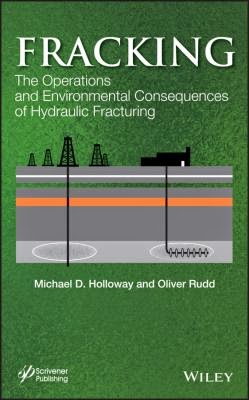
Some context is provided by this title from Wiley online:   Fracking: the operations and environmental consequences of hydraulic fracturing / Michael D. Holloway and Oliver Rudd.  2014.

Thursday, September 25, 2014

New Publications from Craig, FitzGerald, Tarvin; co-authored with alumni

New publications from Oberlin faculty and recent grads (names indicated by bold font), as indexed in Web of Science:

Craig, Norman C. (Professor Emeritus of Chemistry), Yihui Chen '13, Herman van Besien '11, and Thomas A. Blake. 2014. Analysis of the Rotational Structure in the High-Resolution Infrared Spectra of Trans-Hexatriene-2-D(1) and-3-D(1). Journal of Molecular Spectroscopy 303: 26-35. doi:10.1016/j.jms.2014.07.001.  Subscriber access at sciencedirect.com

Kapelewski, Matthew T., Stephen J. Geier, Matthew R. Hudson, David Stueck, Jarad A. Mason, Jocienne N. Nelson '14, Dianne J. Xiao, Elizabeth Gilmour (Physics instructor), Stephen A. FitzGerald (Professor of Physics), et al. 2014. M-2(M-Dobdc) (M = mg, Mn, Fe, Co, Ni) Metal-Organic Frameworks Exhibiting Increased Charge Density and Enhanced H-2 Binding at the Open Metal Sites. Journal of the American Chemical Society 136 (34): 12119-12129. Subscriber access at pubs.acs.org

Lumpkin, David C. '13, Troy G. Murphy, and Keith A. Tarvin (Professor of Biology). 2014. Blood Parasite Infection Differentially Relates to Carotenoid-Based Plumage and Bill Color in the American Goldfinch. Ecology and Evolution 4 (16): 3210-3217. Open access at onlinelibrary.wiley.

Wednesday, September 24, 2014

Maine is uniquely vulnerable to effects of climate change


As reported in the Boston Globe, September 21, by David Abel:  The interactions of so many effects of climate change are leading to increasingly dire consequences, from massive die-off of amphibians to a population explosion among deer ticks, rapid growth in the numbers of invasive species that disrupt ecosystems, and plant communities that are becoming "out of sync" with their pollinators.  Maine is particularly susceptible to the negative impacts of climate change:
"Heat waves, more powerful storms, and rising seas are increasingly transforming Maine — effects that most climate scientists trace to greenhouse gases warming the planet. Wedged between powerful streams of cold and warm air, the state is buffeted by climate fluctuations in the arctic and the Gulf of Maine, both of which are warming rapidly."  --David Abel
I tend to think of Florida or the Gulf of Mexico coastal areas as the most vulnerable to huge storms, without considering climate impacts on our most northeastern state.  Maine seems so solid and impervious, with its thousands of square miles of forested land and higher elevation topography.  Abel's story is a compelling read, examining complex ecosystems which are finely balanced to thrive in a cooler world than where we are now (and certainly cooler than where we are headed).

The Encyclopedia of global warming & climate change / general editor, S. George Philander, gives a summary of the effects of a warming world on regions, states and nations worldwide.

Nature Communications to become Open-Access

http://www.nature.com/ncomms/index.html
www.nature.com/ncomms/index.html
This comes from Nature Publishing, announced on September 23:

Nature Communications is to become Nature Publishing Groups flagship open access title. From 20th October 2014 Nature Communications will only accept open access research submissions.

Nature Communications was launched in 2010 as a born-digital hybrid journal, publishing both open access and subscription content and is now one of NPG's fastest growing titles, receiving over 1000 submissions every month. All research published by the journal represents important advances of significance to specialists within each field, in all areas of the biological, physical, chemical and earth sciences. The journal will continue to uphold its high editorial standards and service, but now through a purely open access publishing model.  More

The most recent review article published in Nature Communications is indicative of the high quality of this new journal from Nature Publishing:  
Spicer, C. D. & Davis, B. G. Selective chemical protein modification. Nat Commun 5 (2014)

Tuesday, September 23, 2014

It's National Voter Registration Day! Register to vote in the science library.

Vote in Ohio!  Citizens of the United States who reside in Ohio as college students are given the right to vote in our state.
Input area code 44074 @ Vote411.org for election information
Voter registration forms are available in the science library; we'll help you complete the form and deliver it to the Board of Elections for you.

There are important state-wide races to be decided in this November's election, as well as choosing the U.S. congressional representative for our district (4th district; incumbent is Jim Jordan).  The outcome of these elections impacts all college students, as policies and budgets help determine quality of life and the extent to which the broader community is supported with access to good education options, funding for scientific research, health care, employment, social services, a clean and sustainable environment, and safe, adequate public works infrastructure.  This is just the short list of ways in which Ohio politicians can affect our daily lives. We are part of the community; you have the right to help determine how we are governed.

--Alison Ricker, current board member and past president, League of Women Voters of the Oberlin Area.  LWVOA on Facebook.

Friday, September 19, 2014

Pneumonia-causing bacteria shown to invade heart muscle

I always enjoy the weekly update from The Scientist, received in my email inbox every Friday.  This week, an excellent summary of research published in PLOS Pathogens caught my eye.

Here, a snippet from Molly Sharlach's news article:
“Researchers from the University of Texas Health Science Center at San Antonio (UTHSCSA) and their colleagues found that mice and rhesus macaques infected with Streptococcus pneumoniae developed myocardial microlesions, which were also present in human autopsy samples. 
“Study coauthor Carlos Orihuela, a microbiologist and immunologist at UTHSCSA, remarked, 'This is sort of a big deal. It’s a brand new disease pathology for a very old bug.' 
“'This is the first report in over 120 years of research with Streptococcus pneumoniae to say that the bacteria actually invade heart tissue,' added Orihuela.“
A.O. Brown et al., “Streptococcus pneumoniae translocates into the myocardium and forms unique microlesions that disrupt cardiac function,” PLOS Pathogens, doi:10.1371/journal.ppat.1004383, 2014.

For some background reading, try this ebook from Springer, accessible through OBIS:
Molecular pathology of lung diseasesedited by Dani S. Zander ... [et al.] New York : Springer, c2008

Friday, September 12, 2014

Neonictinoids: dangerous to bees and more, with negative consequences for entire ecosystems

Researchers continue to amass evidence showing the harmful effects of neonictinoids in pesticides.  National Geographic's news report for a general audience gives an overview, and many scientific papers are quickly found with a search on neonictinoids in Web of Science.  Here are a few of the most recent, beginning with two articles in the open access journal PLOS One.

Tan, K., Chen, W., Dong, S., Liu, X., Wang, Y., & Nieh, J. C. (2014). Imidacloprid alters foraging and decreases bee avoidance of predators. PLOS One, 9(7), e102725. doi:10.1371/journal.pone.0102725
Partial abstract: “Concern is growing over the effects of neonicotinoid pesticides, which can impair honey bee cognition. We provide the first demonstration that sublethal concentrations of imidacloprid can harm honey bee decision-making about danger by significantly increasing the probability of a bee visiting a dangerous food source.”
Sandrock, C., Tanadini, M., Tanadini, L. G., Fauser-Misslin, A., Potts, S. G., & Neumann, P. (2014). Impact of chronic neonicotinoid exposure on honeybee colony performance and queen supersedure. PLOS One, 9(8), e103592. doi:10.1371/journal.pone.0103592 
Find it in the library

Chen, M., Tao, L., McLean, J., & Lu, C. (2014). Quantitative analysis of neonicotinoid insecticide residues in foods: Implication for dietary exposures. Journal of Agricultural and Food Chemistry, 62(26), 6082-6090. doi:10.1021/jf501397m

Godfray, H. C. J., Blacquiere, T., Field, L. M., Hails, R. S., Petrokofsky, G., Potts, S. G., . . . McLean, A. R. (2014). A restatement of the natural science evidence base concerning neonicotinoid insecticides and insect pollinators. Proceedings of the Royal Society B-Biological Sciences, 281(1786), 20140558. doi:10.1098/rspb.2014.0558

Hallmann, C. A., Foppen, R. P. B., van Turnhout, Chris A M, de Kroon, H., & Jongejans, E. (2014). Declines in insectivorous birds are associated with high neonicotinoid concentrations. Nature, 511(7509), 341-+. doi:10.1038/nature13531

Kasiotis, K. M., Anagnostopoulos, C., Anastasiadou, P., & Machera, K. (2014). Pesticide residues in honeybees, honey and bee pollen by LC-MS/MS screening: Reported death incidents in honeybees. Science of the Total Environment, 485, 633-642. doi:10.1016/j.scitotenv.2014.03.042

Stewart, S. D., Lorenz, G. M., Catchot, A. L., Gore, J., Cook, D., Skinner, J., . . . Barber, J. (2014). Potential exposure of pollinators to neonicotinoid insecticides from the use of insecticide seed treatments in the mid-southern united states. Environmental Science & Technology, 48(16), 9762-9. doi:10.1021/es501657w

Also relevant:  Honeybee Neurobiology and Behavior : A Tribute to Randolf Menzel / edited by C. Giovanni Galizia, Dorothea Eisenhardt, Martin Giurf.  Springer, 2012 online for subscribers.

Thursday, August 28, 2014

Pulsar research published by Dan Stinebring

New publication from Stinebring, et al., using the LOw-Frequency ARray (LOFAR) radio telescope, as indexed in Web of Science:

Millisecond pulsar scintillation studies with LOFAR: initial results
Authors:
Archibald, Anne M.; Kondratiev, Vladislav I.; Hessels, Jason W. T.; Stinebring, Daniel R, Francis D Federighi Professor of Physics.

ASTROPHYSICAL JOURNAL LETTERS, 790 (2) AUG 1 2014  [view at IOPScience]

Monday, August 18, 2014

Getting ready for the new year!

Summer is fleeting away, and some of us are trying to squeeze just a little vacation into what is left of August.

Meanwhile, orientation for new faculty has begun and the class of 2018 will be moving in next week.  It's an exciting time of year.  Many of our colleagues around the state have already welcomed incoming and returning students and are in full academic year mode.  By mid-September, these waning days of summer will be a fading memory.  For now, enjoy the relative peace in the science library, where the new book shelves are still brimming with fascinating tomes and a new printer sits gleaming in the copy room, promising reliable performance (hurray!).

Thursday, July 31, 2014

Recent Publications by Calcut, Whelan, Wojtal, et al.

Newly indexed publications by science faculty and students, as reported in the Web of Science:

Borromean rays and hyperplanes.

Calcut, Jack S., Assistant Professor of Mathematics; Metcalf-Burton, Jules R. ’15; Richard, Taylor J. ’14; Solus, Liam T.   Journal of Knot Theory and its Ramifications  23 (4) Article 1450020,  April  2014.  Access at World Scientific

---
MUC16 (CA125): tumor biomarker to cancer therapy, a work in progress.

Felder, Mildred; Kapur, Arvinder; Gonzalez-Bosquet, Jesus; Horibata, Sachi; Heintz, Joseph; Albrecht, Ralph; Fass, Lucas; Kaur, Justanjyot; Hu, Kevin '11; Shojaei, Hadi; Whelan, Rebecca J., Associate Professor of Chemistry; Patankar, Manish S.   Molecular Cancer 13, Article UNSP 129,  MAY 29 2014.  Access at BioMedCentral.  A "highly accessed" open access article.

---
Microstructures and rheology of a calcite-shale thrust fault.

Wells, Rachel K.; Newman, Julie; Wojtal, Steven, Professor of Geology.  Journal of Structural Geology  65: 69-81, Aug. 2014.  Access at OhioLINK EJC