Thursday, June 23, 2016

Indulging in nostalgia... the old Physics Reading Room and Kettering Science Library


Before the Science Center was constructed, the Physics Reading Room existed in the northeast corner of the second floor of Wright, and the Class of 1904 Science Library was crammed into the southeast corner of the first floor of Kettering (in the Chemistry wing of Kettering, razed after the north wing of the Science Center was completed).  Every summer, we were devoted to the tasks of preparing thousands of journal volumes for binding, transferring an equal number of older volumes to the old Carnegie Library for off-site storage, shifting the remaining collections and shelving the newly bound journal volumes on their return.  As the number of print subscriptions has dwindled from 365* to 65 (thereabouts), we are freed of the tyranny of shifting, always shifting, and the tedious labor of wheeling very full book trucks across the street, navigating doors, uneven sidewalks and thresholds, to maneuver in the elevator and the dark, musty stacks of Carnegie.  The Science Center is the perfect home for today's consolidated Science Library.  Come enjoy our lovely setting and peruse the new book area.  So many new books arrived in June!

*Why the decrease in print subscriptions?  They're all online, and oh so convenient.  We keep a core of titles in print that are really helpful for browsing - for learning awesome stuff about things you didn't know you didn't know.  It's a very different experience than simply finding that for which you're searching.  Pick up something new and you're sure to encounter a new idea, a fresh perspective, a spark for your imagination.  See you soon.


Friday, June 03, 2016

Too many to describe, come look!

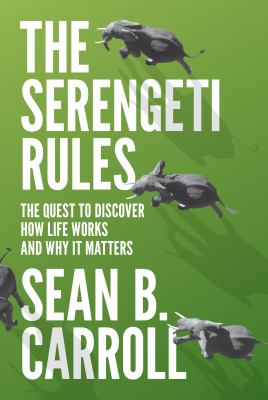
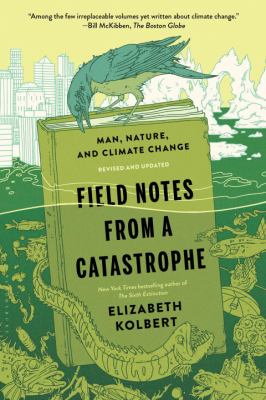
The annual flood of new books arrived with the first week of June, as usual.  There are so many interesting titles!  Here are just a few, with links to OBIS for the full catalog record:

In our own image: savior or destroyer? The history and future of artificial intelligence.  OBIS

The new cosmos : answering astronomy's big questions.  OBIS

Hydrogen-bonded capsules : molecular behavior in small spaces.  OBIS

A world from dust : how the periodic table shaped life.  OBIS

Water as a social opportunity.  OBIS

Creating Africas : struggles over nature, conservation and land.  OBIS

Evolutionary medicine.  OBIS

The human advantage : a new understanding of how our brain became remarkable.  OBIS

Enjoy your summer reading!

Thursday, May 26, 2016

Summer Reading - inside or out?

Whether you prefer the sunny tables on the Science Center piazza or the cool comfort of the science library, the time for summer reading has arrived.  Browse the new books at our front window, where views to the north and south are seen simultaneously.  So many to consider:

Take a road trip with a Roadside Geology... guide book;
Tackle history of science with books on Kepler, the Royal Society, and Aristotle;
Learn what inspired Audubon and F. W. Taylor;
Enjoy little know facts about Melon and Fats;
Consider possibilities for REDD to mitigate climate change.

See you soon!

Saturday, May 21, 2016

45th Class reunion discussion groups gather in science library

What a delight to see so many alumni in the science library!  We are very happy to host the discussion groups here - welcome to all.  


Monday, May 09, 2016

Craters, spherules and ancient terrestrial impactors

New publication from Geology Professor Bruce Simonson:

Spherule layers, crater scaling laws, and the population of ancient terrestrial impactors


Johnson, Brandon C.; Collins, Gareth S.; Minton, David A.; Bowling,
Timothy J.; Simonson, Bruce M.; Zuber, Maria T.

ICARUS, 271 350-359; 10.1016/j.icarus.2016.02.023 JUN 1 2016

Partial abstract:
"Ancient layers of impact spherules provide a record of Earth's early bombardment history. Here, we compare different bombardment histories to the spherule layer record and show that …the flux of large impactors …was likely 20-40 times higher than today." (C) 2016 Elsevier Inc.
Subscriber access at sciencedirect.com

Tuesday, May 03, 2016

Extended Hours for Reading Period

photo: Maya Iverson '12
Holy cow, how is this the last week of classes already?  Sure, February 1 and the start of the semester seem like ages ago... still, the first week of May feels SO early for the last week of classes.  As Reading Period begins this weekend, we will be open until 10 pm on Saturday.  That's the only extension of science library hours for Reading Period through Exams.

We're always willing to help, let us know if you have questions about finding sources for final projects and papers!  Contact Alison Ricker [aricker at oberlin.edu], science librarian, or chat with ObieSci whenever the library is open.

Monday, May 02, 2016

Jason Belitsky and undergraduate research profiled by OhioLINK

OhioLINK frequently highlights researchers at OhioLINK institutions, illustrating the essential contribution of OhioLINK resources and the consortium's importance for successful research and teaching in the state.  Associate Professor of Chemistry Jason Belitsky is featured on the OhioLINK news page this month, with a focus on work in his lab on melanin and its potential role for water filtration - work that continues to involve student researchers.
"Through the research OhioLINK supports [with library resources], Belitsky and his students have found the same chemical in your hair that determines its color could soon be used to filter water."  Read more.

Friday, April 29, 2016

New publication by Wiscons, Zeller and Rowsell

http://pubs.acs.org/covergifs/cgdefu/title.gif
pubs.acs.org/covergifs/cgdefu/title.gif
Wiscons, Ren A. ('15); Zeller, Matthias; Rowsell, Jesse L. C. ✝  2016. Anion Exchange in Cationic Frameworks: Structures of Channel-Forming Triarylpyrylium Tetrafluoroborate Salts.

CRYSTAL GROWTH & DESIGN, 16 (4):2201-2210; 10.1021/acs.cgd.6b00005 APR 2016
subscriber access at American Chemical Society Publications

Wednesday, April 27, 2016

Summer road trip? Take along a roadside geology guide.

Three new Roadside Geology books arrived in this week's new book shipment:

  • Roadside geology of Colorado
  • Roadside geology of Oregon
  • Roadside geology of Utah

 joining the 30 or so books for other states in our collection.  These books are a great way to learn more about the physical environment you may be speeding through, and are a good excuse to stop and appreciate the locale - to enjoy the journey as much as the destination.

While you're considering landforms and formations, you could also identify birds, mammals, reptiles, snakes, invertebrates...  the library is brimming with helpful guides, both regional and world-wide in focus, to animals in various ecosystems.  Plants, too, for that matter!  Any currently enrolled student (as well as faculty and staff) who will be returning in the fall is welcome to borrow books over the summer.  Just ask!

Monday, April 25, 2016

Crayfish conquistadors, salamanders and ovarian cancer biomarkers: presentations by A. Roles, A. Blackman, and R. Whelan

New publications/presentations from Oberlin authors (noted in bold text), as indexed in Web of Science:

SICB.org
Freshwater conquistadors: The influence of hybridization and watershed structure in the invasion of the rusty crayfish into the native range of the congeneric Sanborn's crayfish in north-central Ohio.
Roles, Angela J.  (Assistant Professor of Biology)

Source:
INTEGRATIVE AND COMPARATIVE BIOLOGY, 56 E187-E187; 1 MAR 2016
Session abstract, Annual Meeting of the Society for Integrative and Comparative-Biology (SICB).  January 3-7, 2016; Portland, OR

-----
Do salamanders respond morphologically to introduced species?
Blackman, Augie R. (current junior); Novarro, A. J.

Source:
INTEGRATIVE AND COMPARATIVE BIOLOGY, 56 E261-E261; 1 MAR 2016
Poster Abstract, Annual Meeting of the Society for Integrative and Comparative-Biology (SICB).  January 3-7, 2016; Portland, OR

-----
Identification of nucleic acid aptamers for ovarian cancer biomarkers using multiple selection modes and high-throughput sequencing.

Whelan, Rebecca J. (Associate Professor of Chemistry); Kapur, Arvinder; Felder, Mildred; Shallcross, Jamie (OC '14); Patankar, Manish S.

Source:
CLINICAL CANCER RESEARCH, 22 2 JAN 15 2016
Abstract B42: AACR Special Conference: Advances in Ovarian Cancer Research: Exploiting Vulnerabilities; October 17-20, 2015; Orlando, FL

Friday, April 22, 2016

Earth Day interview with Lab Girl author Hope Jahren

Catalog record in OBIS
NPR Morning Edition's Renee Montagne spoke this morning with geobiologist Hope Jahren about her book Lab Girl (now in new book processing, heading to the science library).  Jahren spoke eloquently about her experience of being the only female in her field (and lab) and the challenges that presented, as well as her commitment to guiding young women through similar challenges with more support and encouragement than she received.  As a scientist who studies plants, seeds and soil, she also expressed beautifully the role of trees in ecosystems, and implored listeners to plant a tree and "choose wisely."  A tree becomes a companion through life, doing so much for all forms of life in its environs.  To paraphrase, Jahren concluded by stressing, "I'm not saying, 'save the trees;' rather, that trees can save us."  Listen.

Jahren's words are a reminder to continue nurturing the tiny lilac tree I planted last year around Earth Day.  I'm happy to see it is sprouting new leaves this spring, sheltered on the south side of the house.

Read about trees in a changing environment (ebook with the same title) at SpringerLink.

Wednesday, April 20, 2016

Fascinating stuff on the new book shelf

What's on the new book shelf?
murder, skeletons, misinformation
spectroscopy, nerves, sexual selection
geophysics, genome, Jurassic plate rotation...
and so much more.

It never fails - a shipment of fantastic reading arrives just at the point in the semester when everyone is thoroughly engaged in required reading for courses and papers or stretched to the limit by rehearsals, performances, lectures and athletics.  April is so full of life, challenge and opportunity - come see your opportunities for yet more wonderful reading, just added to the new book shelf.

Monday, April 18, 2016

Laskowski contributes to "Insights" section of J Exp Bot

http://tinyurl.com/JExpBot
Scheres, Ben and Marta Laskowski, Professor of Biology. 2016. "Root Patterning: It Takes Two to Tangle." Journal of Experimental Botany 67 (5): 1201-1203. [review].  "The mechanisms that pattern lateral root primordia are essential for the elaboration of root system architecture, a trait of key importance for future crop breeding. But which are most important: periodic or local cues? In this issue of Journal of Experimental Botany (pages 1411-1420), Kircher and Schopfer manipulate growth direction to demonstrate the importance of both sources of patterning information."

Access at publisher's site or
OhioLINK Electronic Journal Center

Tuesday, April 12, 2016

Love Your Library During National Library Week

http://tinyurl.com/ALAbutton
Tell us what you love about the science library!  Spread a little cheer during National Library Week.  Look for the blue entry box at the circulation desk (under the hanging air plant). We'll read all of the entries on April 17 and post some of them here.   UPDATE: see the comment from Alison.

Top ten things we love about our library users:
9. Seeing you work together in group study rooms.
8. Knowing you're comfortable enough to nap at the window seats.
7. Cleaning up after yourself (gold stars for you!).
6. Remembering to take your print job with you.
5. Returning library materials on time ;-) -- so nice.
4. Leaving the cutting blade down when you're finished with the cutting board (that thing looks lethal).
3. Watching you help a friend figure out the scanning procedure.
2. Handing your ID to us with a friendly smile when borrowing items. 
And the absolute best thing:
1. Asking interesting questions about fascinating subjects.  That makes our day.
So ask away! Love your library all year long, and share the joy during National Library Week.


Monday, April 11, 2016

Suing the Federal Government and Fossil Fuel Industry on Behalf of Future Generations

From Our Children's Trust:
April 8, 2016:  Today, U.S. Magistrate Judge Thomas Coffin of the federal District Court in Eugene, OR, decided in favor of 21 young Plaintiffs, and Dr. James Hansen on behalf of future generations, in their landmark constitutional climate change case brought against the federal government and the fossil fuel industry. The Court’s ruling is a major victory for the 21 youth Plaintiffs, ages 8-19, from across the U.S. in what Bill McKibben and Naomi Klein call the “most important lawsuit on the planet right now.”
OBIS record
The decision by Judge Coffin coincided, incidentally, with the final day of Oberlin's first Global Issues Symposium: Climate Change Consequences, possibly as we were in the midst of discussion on "Connecting the Global and Local: Assessing the Future of Climate Resilient Action."

It is an interesting coincidence, given our focus on climate change consequences for indigenous peoples and Judge Coffin's words regarding those consequences on young people: ..."the intractability of the debates before Congress and state legislatures and the alleged valuing of short term economic interest despite the cost to human life, necessitates a need for the courts to evaluate the constitutional parameters of the action or inaction taken by the government. This is especially true when such harms have an alleged disparate impact on a discrete class of society." [page 8 of the ruling]

Do you avoid serious consideration of climate change and what it  means for your future?  Find out why: Don't even think about it : why our brains are wired to ignore climate change.

Wednesday, April 06, 2016

NPR breaking news: Supermassive Black Holes May Be More Common Than Anyone Imagined

Excellent reporting by Nell Greenfieldboyce on the Two Way:
  April 6, 2016 • "A black hole with about 17 billion times the mass of our sun has turned up in another remote galaxy. Astronomers now think these mass-eating monsters may not be so rare after all."  See the marvelous image, too. 
Need a bit of background reading?  Two possibilities in our collection:

Black hole : how an idea abandoned by Newtonians, hated by Einstein, and gambled on by Hawking became loved / Marcia Bartusiak.  Yale Univ Press, 2015.
or
Advances in black holes research / editor, Abraham Barton.  Nova, 2015.

Friday, March 25, 2016

Eudicot phylogenetics: new publication from Mike Moore

Sun Y; Moore Michael J, Associate Professor of Biology; Zhang S; Soltis PS; Soltis DE; Zhao T; Meng A; Li X; Li J; Wang H. 2016. Phylogenomic and structural analyses of 18 complete plastomes across nearly all families of early-diverging eudicots, including an angiosperm-wide analysis of IR gene content evolution. Molecular Phylogenetics and Evolution 96:93-101

http://tinyurl.com/ISSN1055-7903
Partial abstract:  The grade of early-diverging eudicots includes five major lineages: Ranunculales, Trochodendrales, Buxales, Proteales and Sabiaceae. To examine the evolution of plastome structure in early-diverging eudicots, we determined the complete plastome sequences of eight previously unsequenced early-diverging eudicot taxa… and compared them to previously published plastomes of the early-diverging eudicots… Maximum likelihood phylogenetic analysis of a 79-gene, 97-taxon data set that included all available early-diverging eudicots and representative sampling of remaining angiosperm diversity largely agreed with previous estimates of early-diverging eudicot relationships.

Monday, March 21, 2016

Best Book Return of the Day: Body by Darwin

Science library: QH366.2 .T374 2015
We are frequently distracted by books just returned by a library borrower.  Today it was Body by Darwin that caught my attention - how evolution shapes our health and transforms medicine. Author Jeremy Taylor states, "I do try to describe the deep evolutionary background to some human medical conditions and to explain why they exist in the first place... [to] leave readers with a new respect for evolution as the prime mover for the structure and function of human bodies, even if it does, on occasion, cause them to break down and drive us into the ER!"

It is fascinating reading for Spring Break - from barefoot running (don't try this without understanding the importance of pace and posture) to neuroimmune responses that contribute to developing Alzheimer's, and the multiple, negative impacts of depleting "old friends" microbiota in the human body, better understanding of human evolution is giving remarkable insights into the cause, prevention and treatment of ailments.   Check it out!

Monday, March 14, 2016

Itchin' for Spring Break? Get Into the Swing of It.

If your spring break plans include a bit of golf, consider taking this book with you:

The science of the perfect swing / Peter Dewhurst.  Now on the new book shelf.

Does spring bring thoughts of baseball opening day?  You might like to know something about that science of that sport:

Physics of baseball & softball / Rod Cross
online at Springer books, access through OBIS.

Wherever you're going, here's hoping that you'll have time for relaxation and renewal.  There are some delightful titles on the new book shelf that can entertain and enlighten you through the week ahead.  Skunk, for example.  Goodness knows they are becoming more active this time of year.  Find out why in this book from the Reaktion Animal series.


Monday, March 07, 2016

Crystal structure, pulsar timing: new publications from faculty and alumni

Lai, Holden W. H. '15, Ren A. Wisconsin '15, Cassandra A. Zentner '13, M. Zeller, and Jesse L. C. Rowsell ✝ 2016. Supramolecular Assembly of Tris(4-carboxyphenyl)arenes: Relationship between Molecular Structure and Solid-State Catenation Motifs. Crystal Growth & Design 16:821-833.
abbreviated abstract:
The crystal structures of seven 1,3,5-tris(4-carboxyphenyl)arenes with functionalized central arene rings are reported... To better understand and appreciate these complicated crystal structures, they were categorized into four distinct stacking/catenation families: simple stacking, single-layer offset catenation, double-layer offset catenation, and rotated-layer catenation. The unique structure of the unfunctionalized parent compound 1,3,5-tris(4-carboxyphenyl)benzene is rationalized in light of the structural behavior of its derivatives.   ✝ deceased
subscriber access at American Chemical Society

Cordes, J. M., R. M. Shannon, and Daniel R. Stinebring. 2016. Frequency-Dependent Dispersion Measures and Implications for Pulsar Timing. Astrophysical Journal 817:16.
abbreviated abstract:
The dispersion measure (DM), the column density of free electrons to a pulsar, is shown to be frequency dependent because of multipath scattering from small-scale electron-density fluctuations. DMs vary between propagation paths whose transverse extent varies strongly with frequency, yielding arrival times that deviate from the highfrequency scaling ... We discuss implications for methodologies that use large frequency separations or wide bandwidth receivers for timing measurements. Chromatic DMs are partially mitigable by including an additional chromatic term in arrival time models. Without mitigation, an additional term in the noise model for pulsar timing is implied. In combination with measurement errors from radiometer noise, an arbitrarily large increase in total frequency range (or bandwidth) will yield diminishing benefits and may be detrimental to overall timing precision.
subscriber access at Institute of Physics IOPScience

Wednesday, February 24, 2016

Proteins and Enzymes: New publications from Biology faculty Maureen Peters and Aaron Goldman

As found in Web of Science, Oberlin authors in bold font:

10.1152/ajpcell.00111.2015
Allman, Erik, Qian Wang, Rachel L. Walker, Molly Austen, Maureen A. Peters, Associate Professor of Biology, and Keith Nehrke. 2016. Calcineurin homologous proteins regulate the membrane localization and activity of sodium/proton exchangers in C. elegans. American Journal of Physiology-Cell Physiology 310 (3) (FEB 1): C233-42.  Access at publisher's website.

Partial abstract: “[W]e have used [C. elegans] to interrogate PBO-1's mechanism of action. Using fluorescent tags to monitor Na+/H+ exchanger trafficking and localization, we found that loss of either PBO-1 binding or activity caused NHX-7 to accumulate in late endosomes/lysosomes. [These and other results lead us to] conclude that the role of CHP in Na+/H+ exchanger regulation differs between apical and basolateral transporters. This further emphasizes the importance of proper targeting of Na+/H+ exchangers and the critical role of CHP family proteins in this process.”

Goldman, Aaron David, Assistant Professor of Biology, Joshua T. Beatty '15, and Laura F. Landweber. 2016. The TIM barrel architecture facilitated the early evolution of protein-mediated metabolism. Journal of Molecular Evolution 82 (1) (JAN): 17-26.  Access in OhioLINK Electronic Journal Center.

Partial abstract: "We show that [triosephosphate isomerase (TIM) barrel] enzymes corresponding to the most taxonomically broad superfamilies also have the broadest range of functions, often aided by metal and nucleotide-derived cofactors that are thought to reflect an earlier stage of metabolic evolution. By comparison to other putatively ancient protein architectures, we find that the functional diversity of TIM barrel proteins cannot be explained simply by their antiquity. Instead, the breadth of TIM barrel functions can be explained, in part, by the incorporation of a broad range of cofactors, a trend that does not appear to be shared by proteins in general. These results support the hypothesis that the simple and functionally general TIM barrel architecture may have arisen early in the evolution of protein biosynthesis and provided an ideal scaffold to facilitate the metabolic transition from ribozymes, peptides, and geochemical catalysts to modern protein enzymes."

Thursday, February 11, 2016

Robert Owen contributes to significant findings by LIGO on gravitational waves

The exciting announcement of confirmation from the research collaborative LIGO of gravitational waves from colliding black holes has been picked up by a number of media outlets, including NPR  and Inside Science.  Robert Owen, Assistant Professor of Physics, is one of many collaborators who contribute to LIGO.  He “has for many years done calculations, animations, and theoretical work in support of this discovery,” observed colleague Dan Stinebring, Francis D. Federighi Professor of Physics and Astronomy.  Sinebring also observes gravitational waves, detecting these phenomena from supermassive black holes.  He collaborates as a contributor on the NANOGrav research project.  This is a remarkable achievement, and we are thrilled to recognize both Owen and Stinebring for their contributions to astrophysics.

Thursday, January 07, 2016

New faculty publications: Hormones in Alzheimer's; Students as Change Agents

Two new publications from faculty, alumna and staff, as indexed in Web of Science:

Burnham, Veronica L '14., and Janice E. Thornton (Professor or Neuroscience) 2015. Luteinizing hormone as a key player in the cognitive decline of Alzheimer's disease. Hormones and Behavior 76:48-56.  [full text from sciencedirect.com]

Partial abstract: "Luteinizing hormone, which is increased with age in both men and women (in response to removal of negative feedback), has surfaced as a potentially powerful player in the risk and onset of Alzheimer's disease. Mounting evidence in basic research and epidemiological studies supports the role of elevated luteinizing hormone in exacerbating age-related cognitive decline in both males and females. This review summarizes the recent developments involving luteinizing hormone in increasing the cognitive deficits and molecular pathology characteristic of Alzheimer's disease."

Daneri, Daniel Rosenberg (A. J. Lewis Assistant Project Manager), G. Trencher, and John Petersen (Professor of Environmental Studies). 2015. Students as change agents in a town-wide sustainability transformation: the Oberlin Project at Oberlin College. Current Opinion in Environmental Sustainability 16:14-21.  [full text from sciencedirect.com]

Partial abstract:  "The potential of multi-stakeholder partnerships to enrich sustainability education through experiential learning is well documented. Yet there is less knowledge about the impacts on partnerships that result from student participation and the models that facilitate students to serve as agents of change and research. To address this knowledge gap, we examine the Oberlin Project at Oberlin College, an ambitious community partnership aimed at town-wide climate neutrality and sustainability. Findings show that contributions to stakeholder learning and partnership progress can occur through student participation models such as project-based learning, transacademic research, and internships."

Wednesday, December 23, 2015

10 Top Retractions of 2015, from Retraction Watch

Peer-review and fine editorial process do not guarantee scientific integrity and valid research results, sadly enough.  As reported in The Scientist, Retraction Watch has published its Top 10 Retractions of 2015 and the list includes published articles from such high profile titles as Science, Cell, Cancer Research, and Genes and Development.  Errors in judgment, neglecting essential statistical tests, falsifying data, plagiarism, and faulty study design were all reported.   Critical evaluation by all reviewers, editors and readers is still needed, even for high profile researchers with distinguished careers and piles of papers to their credit.  Fraudulent research can lead to legal action, a prison sentence and a judicial decision that grant funding must be repaid. Oh my.

Adam Marcus, Alison McCook, and Ivan Oransky contributed reporting on The Scientist story.

Friday, December 18, 2015

Dan Stinebring publishes in Astrophysical Journal with the NANOGrav Collaboration

Dan Stinebring, Physics and Astronomy, is one of 44 researchers from 12 different states plus Canada, China, England and Germany who co-authored this paper, just indexed in Web of Science:

The NANOGrav nine-year data set: observations, arrival time measurements, and analysis of 37 millisecond pulsars.
Astrophysical Journal 813 (1): :10.1088/0004-637X/813/1/65 NOV 1 2015.  Article no. 65.

Authors:
Arzoumanian, Z; Brazier, A; Burke-Spolaor, S; Chamberlin, S; Chatterjee,
S; Christy, B; Cordes, JM; Cornish, N; Crowter, K; Demorest, PB; Dolch,
T; Ellis, JA; Ferdman, RD; Fonseca, E; Garver-Daniels, N; Gonzalez, ME;
Jenet, FA; Jones, G; Jones, ML; Kaspi, VM; Koop, M; Lam, MT; Lazio, TJW;
Levin, L; Lommen, AN; Lorimer, DR; Luo, J; Lynch, RS; Madison, D;
McLaughlin, MA; McWilliams, ST; Nice, DJ; Palliyagurui, N; Pennucce, TT;
Ransom, SM; Siemens, X; Stairs, IH; Stinebring, DR; Stovall, K; Swiggum,
JK; Vallisneri, M; van Haasteren, R; Wang, Y; Zhu, WW.

Partial Abstract:
"We present high-precision timing observations spanning up to nine years for 37 millisecond pulsars monitored with the Green Bank and Arecibo radio telescopes as part of the North American Nanohertz Observatory for Gravitational Waves (NANOGrav) project. We describe the observational and instrumental setups used to collect the data, and methodology applied for calculating pulse times of arrival; these include novel methods for measuring instrumental offsets and characterizing low signal-to-noise ratio timing results."

Access the pre-publication manuscript at ArXiv

More about NANOGrav.

Friday, December 11, 2015

Distractions on the last day of classes

Looking out and looking in ...
Looking north from the science library: jackets not needed this mild December afternoon.

Standing in the corridor: Multiple reflections give the new books a new light.

Monday, November 30, 2015

Follow the Climate Change Talks in Paris: COP21

One of thousands of books
on climate change in OBIS
These select news sources are devoting special coverage to the United Nations Climate Change Summit in Paris, beginning today.  Follow one or all of them for different perspectives.

The Christian Science Monitor

The Guardian

National Public Radio

Nature

New Scientist

The New York Times

Science  American Association for the Advancement of Science

Scientific American


Thursday, November 12, 2015

God, hyenas, hormones, methylation, synthesis, hazards, Western Reserve, meteorite and glaciers...

Random nouns from
titles of books now
on the new book shelf!
Not to forget frogs,
physician, evolution, porpoises, senses...

Come and read.

Monday, November 09, 2015

Fall is fleeting

The colors of fall gave warmth of our view last week of north quad. A few days and a hard frost later, yellow leaves have dropped.  The window seats are a favorite, in every season.


Friday, October 30, 2015

New publications from students and faculty: Elrod, FitzGerald, and Petersen

Oberlin affiliated author names are in bold print:

Fig 1. Aerial view of experimental wetland cells taken in 2006.
Brandt, EC, et al. PLoS ONE
Erika C. Brandt, John E. Petersen, Jake J. Grossman, George A. Allen, David H. Benzing. (2015) Relationships between Spatial Metrics and Plant Diversity in Constructed Freshwater Wetlands.
PLoS ONE 10(8): e0135917. doi:10.1371/journal.pone.0135917
Open access at Public Library of Science.


FitzGerald, Stephen A.; Eckdahl, Christopher T.; McDonald, Cooper S.;
Nelson, Jocienne N.; Shinbrough, Kai; Lai, Holden W. H.; Rowsell, Jesse
L. C.† (2015)
Orientational ortho-H-2 pair interactions in the microporous framework MOF-5.
Physical Review B, 92 (13):10.1103/PhysRevB.92.134304 OCT 9 2015
Subscriber access at American Physical Society

Stropoli, Santino J.; Elrod, Matthew J. (2015)
Assessing the Potential for the Reactions of Epoxides with Amines on Secondary Organic Aerosol Particles.
Journal of Physical Chemistry A, 119 (40):10181-10189; 10.1021/acs.jpca.5b07852 OCT 8 2015
Subscriber access at American Chemical Society

†Deceased.

Monday, October 12, 2015

Searching for unicorns

Longing to see a mythic beast?  Check out:

The last unicorn : a search for one of Earth's rarest creatures / William DeBuys.
QL737.U53 D434 2015. [on the new book shelf]

We have this book because of an excellent segment on NPR's On Point with guest host Jane Clayson, May 26, 2015.  If you don't have time to read the book right now, listening to Jane Clayson's interview with conservationist and author William DeBuys is the next best thing.

The "unicorn" is a saola, by the way - known to science for a little over two decades.  It's a good story!

Friday, October 09, 2015

Historical Ecology and the Landscape of Confucius

A new publication from Joshua Wright, Visiting Assistant Professor of Anthropology:
"The Anthropocene and the landscape of Confucius: A historical ecology of landscape changes in northern and eastern China during the middle to late-Holocene."
Rosen, Arlene M.; Lee, Jinok; Li, Min; Wright, Joshua; Wright, Henry T.; Fang, Hui.
Holocene vol. 25 (10):1640-1650; OCT 2015
Extracted from the abstract:
“This research provides geomorphological evidence that early human impact began in the Yangshao period with deforestation, soil erosion, and increased alluviation in the upper catchment of the Yiluo River.”  Read this in the OhioLINK Electronic Journal Center.

Learn more about the practice of historical ecology:  The historical ecology handbook : a restorationist's guide to reference ecosystems, edited by Dave Egan and Evelyn A. Howell.  Washington, DC : Island Press, 2005.

Monday, October 05, 2015

Antiparasite Drug Developers Win Nobel Prize


News of today's Nobel Prize announcement can be found in countless ways.  This is the highly readable account from The Scientist: "William Campbell, Satoshi Omura, and Youyou Tu have won this year’s Nobel Prize in Physiology or Medicine in recognition of their contributions to antiparasitic drug development."

...or listen to Rob Stein's report on  NPR Morning Edition.  Nobel Prize week is always inspiring, and this year's winners for Medicine are no exception.  Their research has led to treatment of potential benefit to the nearly 4 billion people worldwide who are exposed to these particular disease-causing parasites.

Wondering how many parasites bedevil humans?  Here's an alarming guide:
The parasites of Homo sapiens : an annotated checklist of the protozoa, helminths, and arthropods for which we are home / R.W. Ashford and W. Crewe.  Taylor & Francis, 2003.

Friday, October 02, 2015

"Luckily, I'm a botanist"

The unlikely coincidence of NASA's announcement of flowing water on Mars and release of the film "The Martian" was not lost on NPR Morning Edition host Renee Montagne or film critic Kenneth Turan.  Our botanist friends will surely appreciate the clip of Matt Damon, left stranded on Mars with the challenge of growing enough food for himself for three years on a planet that does not support plant growth:  "Mars will come to fear my botany powers."  Love it!  Listen to Kenneth Turan's review.  Cory Powell offers "10 Quick Thoughts about Water on Mars" on his blog hosted by Discover Magazine.

There is an abundance of literature on Mars readily available in the science library and accessible from OBIS.  Here are two excellent overviews for the non-specialist:

A Traveler's Guide to Mars / William K. Hartmann
Mars : an introduction to its interior, surface and atmosphere / Nadine Barlow
And, check out this highly entertaining reflection from Dr. Chris Martine: "Why I'm Naming a New Plant Species After The Martian," on the Huffington Post Blog [tip of the hat to Mike Moore for this lead!].

Tuesday, September 29, 2015

Climate Science, 50 Years Later

From the American Association for the Advancement of Science:
On 5 November, 1965, the group now known as the President’s Council of Advisors on Science and Technology (PCAST) cautioned President Lyndon B. Johnson that continued accumulation of atmospheric carbon dioxide resulting from fossil-fuel burning would “almost certainly cause significant changes” and “could be deleterious from the point of view of human beings.”
AAAS observes that fifty years later, "the reality of human-caused climate change has been reaffirmed by virtually every leading scientific organization as well as the vast majority of individual climate scientists worldwide."  The public is invited to participate in a free day-long scientific symposium to commemorate the 50th Anniversary of the First Official Climate-Change Warning to a U.S. President, to "review what scientific research has revealed over the past 50 years, and offer a forward-looking assessment of the range of scientific, technological, communication, and policy options for the future."  Registration is required.  More @ AAAS.

Organized by AAAS and the Carnegie Institution for Science,
with support from the American Meteorological Society
and the Linden Trust for Conservation

Thursday, 29 October, 2015
8:00 a.m. – 5:00 p.m.
1530 P Street, N.W.
Washington, D.C. 20005

Tuesday, September 08, 2015

Review article by Gunnar Kwakye, et al., on manganese and Parkinson's disease.

New publication by Neuroscience Assistant Professor G. Kwakye, indexed by Web of Science:
 
Manganese-Induced Parkinsonism and Parkinson's Disease: Shared and Distinguishable Features.
Kwakye, Gunnar F.; Paoliello, Monica M. B.; Mukhopadhyay, Somshuvra; Bowman, Aaron B.; Aschner, Michael

INTERNATIONAL JOURNAL OF ENVIRONMENTAL RESEARCH AND PUBLIC HEALTH, 12 (7):7519-7540; 10.3390/ijerph120707519 JUL 2015.  Open access article at PubMed Central.

Partial abstract:
[This] review discusses the advances made in understanding the essentiality and neurotoxicity of Manganese (Mn). We review occupational Mn-induced parkinsonism and the dynamic modes of Mn transport in biological systems, as well as the detection and pharmacokinetic modeling of Mn trafficking. In addition, we review some of the shared similarities, pathologic and clinical distinctions between Mn-induced parkinsonism and Parkinson's disease. Where possible, we review the influence of Mn toxicity on dopamine, gamma aminobutyric acid (GABA), and glutamate neurotransmitter levels and function. We conclude with a survey of the preventive and treatment strategies for manganism and idiopathic Parkinson's disease.
Connect to MDPI

Published by MDPI, an open access publisher. 

Thursday, September 03, 2015

Study Carrels will be assigned Friday September 4

Study carrel sign-up is underway in the science library.  Complete your carrel request before 4pm on September 4 for the initial round of assigning carrels.

Declared science majors are given first consideration, but there are usually a good number of our 30 carrels that are assigned to others - everyone is welcome.

More information on the science library "About" page.

Monday, August 31, 2015

Oliver Sacks TED talk on Hallucination

With the death of Oliver Sacks, the world has lost another brilliant mind and generous soul.  You can appreciate his contributions, very quickly, listening to his amazing TED talk (2009), linked from National Public Radio.

The library owns many of his books; engaging, thought-provoking and delightful to read.  Borrow one soon!


Monday, August 17, 2015

Oberlin students ready to save the world: a Sierra Magazine eco-valedictorian

Cover art by Nate Williams
Oberlin ranked 5 out of the "10 coolest schools" in the United States, on the Sierra Club "green" scale, including measures of sustainability, eco-centered curriculum, energy and water usage, sources of energy and an overall culture of conservation.  Oberlin's score was 769.50, just slightly ahead of University of Connecticut and trailing a bit behind Colorado State University with its School of Global Enviornmental Sustainability.  Univesity of California, Irvine was the leader and a two-time winner, with a score of 859.75.  See the full lists and rankings @ sierra club.org/coolschools.  The story is in the September/October 2015 print issue, received by donation in the science library from Sierra Club life member Alison Ricker.

Friday, August 14, 2015

Three New Publications from the Chemistry Department

Recent publications from the Chemistry department (names indicated in bold), with partial abstracts as extracted from SciFinder.

journals.elsevier.com/food-chemistry/
Robert Q. Thompson.
Homocapsaicin: It's NOT the 7-ene-9-methyl isomer.
Food Chemistry 2015, 182, 72-73.
There are key differences in the occurrence of homocapsaicin isomers: 6-ene-8-Me (more abundant in nature), 6-ene-9-Me (less abundant in nature), and 7-ene-9-Me (not found in nature). Nevertheless, even in scientific journals, the 7-ene-9-Me isomer has been erroneously associated with natural sources on numerous occasions.

Ren A. Wiscons, M. Zeller, and Jesse L. C. Rowsell.
Crystal structure of 2,3-dimethylmaleic anhydride: continuous chains of electrostatic attraction.
Acta Crystallographica, Sect. E: Crystallographic Communications 2015, 71, 950-955
In the crystal structure of 2,3-dimethylmaleic anhydride, C6H6O3, the closest non-bonding intermolecular distances, between the carbonyl C and O atoms of neighboring molecules, were measured [and found to be surprisingly close]. Computational modeling suggests that this close contact is caused by strong electrostatic interactions between the carbonyl C and O atoms.  Open Access.

Liora E. Mael, Michael I. Jacobs, and Matthew J. Elrod.
Organosulfate and Nitrate Formation and Reactivity from Epoxides Derived from 2-Methyl-3-buten-2-ol.
Journal of Physical Chemistry A 2015, 119, 4464-4472
Recent work has suggested that 2-methyl-3-butene-2-ol (MBO)-derived epoxide intermediates are responsible for some of the molecular species commonly found in ambient secondary organic aerosol (SOA). Nuclear magnetic resonance techniques were used to study the reaction kinetics and products of two potential MBO-derived epoxides under acidic solution conditions in the presence of sulfate and nitrate nucleophiles… the nucleophilic reactions were observed to be quite regiospecific, and the tertiary addition product species were found to hydrolyze on atmospherically relevant time scales.
order a reprinted issue from ACS

Wednesday, July 22, 2015

Visual Guide to Understanding Climate Change

Just released: the ultimate visual guide to understanding climate change from the world's leading experts: the International Panel on Climate Change (IPCC).

To supplement the IPCC: we have SO many wonderful books to guide you through the complexity of climate change findings and publications: from considering varying data sets, long-term projections, variability of climate models, the politics of climate, and more.   I recommend Climate Peril.  It will get your attention.

The essential news: it's bad, it's getting worse, we all need to try and make it better. Please. Browse the shelves virtually: QC 903, then come read to understand why slowing global warming to mitigate climate disruption is essential for our well-being, now and decades into the future.

Friday, July 10, 2015

CLOSED Mon-Wed July 13-15

photo credit:  Maya Iverson OC'12
The Science Library will be closed for much needed maintenance on Monday-Wednesday, July 13-15. No library staff will be onsite, but the science librarian will monitor email for any queries regarding online access to library resources. Email: slibrary@oberlin.edu. We apologize for the inconvenience.

Thursday, July 09, 2015

Further research published from Rowsell and FitzGerald collaboration

The Royal Society of Chemistry has published further research from the labs of the late Jesse Rowsell, Department of Chemistry and Biochemistry, and Stephen FitzGerald, Department of Physics and Astronomy. Research students Cassandra Zentner (OC '13), Holden Lai (OC '15), Joshua Greenfeld (OC '11), and Ren Wiscons (OC '15), all of the Rowsell lab, were instrumental in completing this work and manuscript, published posthumously under Rowsell's name.

Zentner is corresponding author on the paper. Congratulations to all of the authors for continuing the work and producing a fine record of results.

Zentner CA, Lai HWH, Greenfield JT, Wiscons RA, Zeller M, Campana CF, Talu O, FitzGerald SA, Rowsell JLC. 2015. High surface area and Z′ in a thermally stable 8-fold polycatenated hydrogen-bonded framework. Chemical Communications 51(58) July 7:11642-5.
Access at the Royal Society of Chemistry or at OhioLINK Electronic Journal Center. Published online June 16, 2015; print issue is dated July 7, 2015.

Monday, June 15, 2015

Climate change is all around. Get the facts.

Among the burgeoning collection of books on the new book shelf are many important and timely titles on different aspects of climate change.  Check them out!  Be the informed person who recognizes the difference between a climate change denier (a more accurate term than skeptic, in this context) and someone who understands the magnitude of this grave challenge to ecosystems worldwide.

Climate change, water and agriculture : towards resilient systems.

Climate, energy, and water : managing trade-offs, seizing opportunities.

Climate justice : vulnerability and protection.

Climate shock : the economic consequences of a hotter planet.

The politics of global climate change.

Climatology versus pseudoscience : exposing the failed predictions of global warming skeptics.

There are SO many more titles, in every subject area of the science library collection, on the new book shelf now!  'Tis the annual bounty of June deliveries to the science library.

Thursday, May 21, 2015

Rats on a gambling task tell us something about decision making in schizophrenia

A new publication by Assistant Professor of Neuroscience Tracie Paine:

Paine TA, O'Hara A, Plaut B, Lowes DC. 2015. Effects of disrupting medial prefrontal cortex GABA transmission on decision-making in a rodent gambling task. Psychopharmacology (Berl ) 232(10):1755-65

Partial abstract:  "Decision-making is a complex cognitive process that is mediated, in part, by subregions of the medial prefrontal cortex (PFC). Decision-making is impaired in a number of psychiatric conditions including schizophrenia. Notably, people with schizophrenia exhibit reductions in GABA function in the same PFC areas that are implicated in decision-making… [The data collected in this experimental study of rat cognitive function] provide proof-of-concept evidence that disruptions in GABA transmission can contribute to the decision-making deficits in schizophrenia."
Full text at OhioLINK EJC or SpringerLink.

Monday, May 18, 2015

And they're gone...

Science Library north reading area
Just like that, the semester is over, with nary an indication that every seat was filled just three days ago.  The stillness of the library the first morning after finals frenzy is not a surprise - but it feels strange, nonetheless.  Just a brief lull before alumni and commencement visitors fill the town!

Library Hours, May 18 - Aug 25

Mon - Fri 9am-12pm & 1-4:30pm
Sat - Sun  CLOSED

We will also be closed:
May 25, July 3 and July 13-15.

Friday, May 15, 2015

New Publications from Craig, Fitzgerald, Simen, and Woods, with alumni

Oberlin authors are noted in bold font.  Use Journal Finder to access these journals.

Craig, Norman C., [with former students:] Appiah, Kwabena J., Miller, Charles E., Seiden, Michael V, Varley, Joseph E. 2015. Reevaluation of matrix-isolation infrared spectra of the isotopologues of trans-diazene and attempts to prepare cis-diazene by photoisomerization. Journal of Molecular Spectroscopy 310:3-7.

Demaison J, Craig, Norman C, Groner P, Ecija P, Cocinero EJ, Lesarri A, Rudolph HD. 2015. Accurate equilibrium structures for piperidine and cyclohexane. Journal of Physical Chemistry A 119(9):1486-93.

FitzGerald, Stephen A., Schloss, Jennifer M., Pierce, Christopher J., Thompson, Benjamin, Rowsell, Jesse LC, Yu K, Schmidt JR. 2015. Insights into the anomalous vibrational frequency shifts of CO2 adsorbed to metal sites in microporous frameworks. Journal of Physical Chemistry C 119(10):5293-300.

Freestone DM, Simen, Patrick, Balci F, Church RM. 2015. Optimal response rates in humans and rats. Journal of Experimental Psychology-Animal Learning and Cognition 41(1):39-51.

Mark, Zachary ’14, Yang H, Zimmerman A, Chen Y. 2015. Quasinormal modes of weakly charged kerr-newman spacetimes. Physical Review D 91(4):044025.

Standage D, Wang D, Heitz RP, Simen, Patrick. 2015. Toward a unified view of the speed-accuracy trade-off. Frontiers in Neuroscience 9:139.

Woods, Kevin. 2015. Presburger arithmetic, rational generating functions, and quasi-polynomials. Journal of Symbolic Logic 80(2):433-49. [current volumes are not available online to Oberlin users; use ILL]