Friday, March 16, 2007

Al Gore to Testify Before Congress on Global Warming

A Message from Al Gore, in preparation for testimony before Congress:

At the hearing before Congress, I will deliver 294,374 messages already signed, demonstrating that hundreds of thousands of people share my sense of urgency regarding global warming.

If an additional 55,626 people sign our message
, it will be as though 350,000 of us are there at the hearing expressing our determination to convince Congress to act. Having served in the House and Senate, I can tell you that members of these committees would find this to be a meaningful and impressive show of support. There are only 5 days left before the hearings begin, so please do not pass up this opportunity to join in showing the broad public support we need in order to solve the climate crisis.

Sign the message.

Ask someone else to also visit http://www.algore.com/cards.html.

Wednesday, March 14, 2007

On the New Book Shelf: Understanding Space-Time

Understanding Space-Time : the philosophical development of physics from Newton to Einstein, by Robert DiSalle (now on the new book shelf) was recently examined by Michael Freidman in an extensive essay review, published in Studies in History and Philosophy of Modern Physics 38 (2007): 216-225. Read the review on the OhioLINK Electronic Journal Center (for OhioLINK library users only).

Friedman states "Robert DiSalle’s new book introduces, and beautifully exemplifies, a novel approach to the philosophy of space–time physics." He concludes with the observation, "Not only does it bring a fresh perspective to the familiar historical development from Newton to Einstein, it integrates this development with the parallel history of philosophy of space, time, and geometry from Kant through Helmholtz and Poincare´ , and it suggests a powerful response, as well, to the Kuhnian problem of conceptual incommensurability. DiSalle’s book, despite its relatively modest length, is a magnificent achievement in the history and philosophy of space–time physics, which no one seriously interested in the topic can now afford to ignore."

Sign the Petition! Call for Public Access to Publicly Funded Research


Petition for Public Access to Publicly Funded Research in the United States

Sign this petition to register your support for free and open access to research funded by the U.S. Federal government. For more information on current policies and legislation for taxpayer access to federally funded research – including the Federal Research Public Access Act – visit the Alliance for Taxpayer Access Web site.

Friday, March 02, 2007

Rachel Carson Online Book Club Begins This Month

Celebrate Rachel Carson's legacy by joining an online book club sponsored by the The Friends of the National Conservation Training Center. The book club is held in
conjunction with the U.S. Fish and Wildlife Service’s efforts to commemorate the 100th anniversary of Rachel Carson’s birth.

Beginning in March 2007, and continuing through November 2007, participants will read books written by and about Rachel Carson. Titles include:


Friday, February 23, 2007

And the Winners Are... Globie Awards Announced by Environmental Defense

From Environmental Defense:

We're pleased to announce the winners of the first-ever Global Warming Globie Awards.

Based on the votes from more than 20,000 online supporters, we've chosen the best and worst global warming performances - from public officials to corporate leaders.

Their actions in recent years - from promoting solutions to obstructing real action - got them nominated. But your votes determined the winners.

Seattle Mayor Greg Nickels narrowly edged ahead of California governor Arnold Schwarzenegger by fewer than 30 votes, for spearheading a national effort to organize America's cities to cut carbon dioxide pollution 7% below 1990 levels by 2012. The "U.S. Mayors' Climate Protection Agreement" has been signed by 393 mayors representing over 57 million Americans.

View the rest of the winners.

Wednesday, February 21, 2007

Wikipedia: Knowledge to the People. An Interview With the Founder.

New Scientist, February 3-9, 2007 (vol. 193, no. 2589) features an interview with Jimmy "Jimbo" Wales, founder of Wikipedia. It offers insight into the amazing growth and popularity of this collaborative enterprise, and touches on plans for the search engine [search.wikia.com].

This issue of New Scientist is now on display with other journals received this week. The exclusive interview may be read online at newscientist.com.

newscientist.com also offers the Readers Q & A with Wikipedia founder.

image: from newscientist.com; Jimbo Wales during the interview.

Tuesday, February 20, 2007

Pimp Your Bookcart Contest Winners

One of the winners of the Pimp Your Book Cart contest, @ Overdue Media, creators of the Unshelved comic strip.

This may seem far afield from science - but creativity is a huge part of any scientific endeavor (see C.M. Hall's essay on science and poetry on the wall across from the chemistry office), and these "pimped" book carts are nothing if not testimony to creativity, innovation, and technical expertise. So enjoy!

See all the winners and notable entries.

Feel inspired? Start planning now for next year's contest! We have a big red book cart that could definitely use a bit of imagination.

Sunday, February 18, 2007

Science.gov Version 4.0 Launched


From a Science.gov press release dated Feb. 16, 2007

"At Science.gov, a single query can be launched across more than 50 million pages of government-sponsored science information and research results. Science.gov allows users to search the surface Web as well as the deep Web, where traditional search engines typically cannot go. The information is free and no registration is required.

"Hosted by the DOE Office of Scientific and Technical Information (OSTI) Science.gov is the gateway to reliable science and technology information from 16 organizations within 12 federal science agencies."

Friday, February 16, 2007

Huge Underground Lakes Discovered Beneath Rapidly Flowing Glaciers in Antarctica

From NPR.org Morning Edition:
"Researchers have discovered vast lakes under the ice in Antarctica, a find that could help scientists understand the rapid and currently unpredictable behavior of huge moving glaciers — called ice streams — that can influence global sea levels."

NPR correspondent Richard Harris interviews scientists who can help answer the question "how quickly might the earth's vast ice sheets melt, and quickly will sea level rise?"

Helen Fricker, Scripps Institution of Oceangraphy, and her colleagues report in an article soon to be published in Science that more than 145 underground lakes have been documented in Antarctica. Water in these lakes is moving rapidly from one lake to another and even out to sea, accelerating the flow of glaciers on the surface. Glaciers breaking off the continent into the Antarctic Ocean cause global increases in sea level. [listen to the story on Morning Edition]

Image from Scripps Institution of Oceanography. Read the accompanying story on rifts in glaciers.

Tuesday, February 13, 2007

Library Closed Through Wednesday


Snow Closing Update: The college remains closed through Wednesday, with the exception of essential services for student dining, safety & security, the heating plant, etc. See Oberlin Oncampus for more info. Reserve materials due on Tuesday or Wednesday will not result in overdue fines if returned by 10 a.m. on Thursday. Questions? Email Alison Ricker or IM alisonricker (Yahoo or AOL). Thank you!

More snow art from Calvin. The "The Boogarious Baffoon" - by Bill Watterson.

Snow Emergency Declared - Library Closed

Due to the severe weather now and predicted to continue this evening, the college is closed. See the campus alert on Oberlin Oncampus. Reserve materials checked out this afternoon with due times after 2:30 p.m. may be kept overnight and returned to the library on Wednesday, February 14 - assuming we will be open for business by then!


Snow art by Calvin (Calvin & Hobbes, by Bill Watterson)

Friday, February 09, 2007

Vote for the Best and Worst Preformances in the Fight Against Global Warming


From Environmental Defense:
GLOBAL WARMING GLOBIES

Vote for Globie Winners

Forget the red carpet - we're rolling out the green and announcing our first ever global warming Globie Awards.

Our nominees embody the best and worst performances in the fight against global warming.

And best of all, you get to choose who wins! Vote here.

Winners will be announced the Friday before the Oscars.

Tuesday, February 06, 2007

Study Carrels Available in the Science Library


Want a corner of the science library that's all yours? Sign up for a study carrel. Study carrel application

We have 30 carrels, where you are welcome to leave checked out books, papers, and other materials needed for research and study. No food, please, and beverages are allowed only in certain types of containers. Food & Drink policy.

Study carrels will be assigned February 12, after 3:30 p.m.

Friday, February 02, 2007

Listen to Deep-Sea Hydrothermal Vents

As reported by Timothy J. Crone and associates in PLoSOne, deep-sea hydrothermal vents produce a variety of sounds. Their recordings are "the first unambiguous field recordings showing that these vents radiate significant acoustic energy."

The Sound Generated by Mid-Ocean Ridge Black Smoker Hydrothermal Vents.
Timothy J. Crone, William S.D. Wilcock, Andrew H. Barclay, Jeffrey D. Parsons, School of Oceanography, University of Washington, Seattle, Washington, United States of America.

"Hydrothermal flow through seafloor black smoker vents is typically turbulent and vigorous, with speeds often exceeding 1 m/s. Although theory predicts that these flows will generate sound, the prevailing view has been that black smokers are essentially silent.
The sounds contain a broadband component and narrowband tones which are indicative of resonance."

Listen to the audio files on T. J. Crone's web site
@ Univ. of Washington School of Oceanography.

Small Brains, Big Fight: 'Hobbits' Called New Species

From Science news this week, by Michael Balter

This week, a research team presented new data in the Proceedings of the National Academy of Sciences that it says support the contention that a diminutive, small-brained hominid found on the Indonesian island of Flores truly represents a new species.

Read the news summary at www.sciencemag.org.

Read the research article at PNAS: Proc. Natl. Acad. Sci. USA, 10.1073/pnas.0609185104

Thursday, February 01, 2007

“Green Budget” Calls for Restoration of Vital Conservation Program Funding

From The Wilderness Society, January 30, 2007 press release:

The nation’s leading environmental groups released the annual “Green Budget” for fiscal year 2008, calling on Congress and the president to restore adequate funding to protect public health and natural resources for the American people. Last year, the Bush administration tried to cut environmental spending by $4.3 billion -- 13 percent below FY 2006 levels.

Advocates say adequate funding for the programs listed in the Green Budget would provide critical resources to help combat global warming, clean the air, improve water quality and protect nature and wildlife.

Wednesday, January 31, 2007

Not Even Wrong. Peter Woit's view of superstring "theory"

From the book blurb: Wolfgang Pauli coined the phrase "not even wrong" to describe scientific theories or ideas that are "so incomplete that they could not even be used to make predictions to compare with observations to see whether they were wrong or not." Peter Woit, lecturer in the mathematics department of Columbia University, puts forth the view that superstring theory is such an idea, not a theory at all, because it offers no predictions and this "very lack of falsifiability is what has allowed the subject to survive and flourish."

Now on the new book shelf. Not Even Wrong.

See also Peter Woit's blog by the same title, which gives a handy link to book reviews.

Subject searches in OBIS on string models and superstring result in a number of relevant titles.

Wednesday, January 24, 2007

Dialogue, Not Diatribe: Collaboration in Science in Environment and BioScience

The January 2007 issues of Environment and BioScience, both on display in the science library, consider the essential need to dialogue in order to "advance cross-displinary research" (Eigenbrode, S.D., et al., BioScience 57(1): 55) and effectively integrate science and policy through "joint fact finding" (Karl, H.A., L.E. Susskind and K.H. Wallace, Environment 49(1): 20).

The critical need to refine communication among scientists in different disciplines and between scientists and policy makers, as well as scientists and the general public, and is further examined by AIBS President Douglas Futuyma in his editorial Science's Greatest Challenge (also in the January issue). Futuyma states, "The challenge that matters now is to make sure that science is taken seriously... can a pragmatic people not see that a scientific consensus is more trustworthy than the pronouncements of an industry-sponsored naysayer or a president untrained in biology or physics?" Toward this end, the AIBS will work with the National Academy of Sciences to make 2009 the "Year of Public Understanding of Science."

image: Environment 49(1): 20.

Tuesday, January 23, 2007

New Light on Ancient Worlds Through Geological Research

The January 2007 issues of Geotimes and Geology each feature icons of ancient civilizations on their covers. Odysseus, as memorialized in a museum located in the Villa of Tiberius, Sperlonga, Italy, draws the reader to the Geotimes report on "Finding Ithaca," the story of how geologists are helping to locate the possible real-world sites in Homer's epic poem Odyssey.

Geology
pictures Pueblo Bonito, "the largest ruin at Chaco Canyon, New Mexico... The abandonment of dwellings by ancestral Americans, such as those at Chaco, may have been caused by sudden shifts in climate. Asmerom et al.* suggest that solar variability, via modulation of the tropical Pacific, may be the cause of Holocene climate change." Both journal issues are on the new journal display rack today.

*Asmerom, Y. V.Polyak, S.Burns, J.Rassmussen. Solar forcing of Holocene climate: new insights from a speleothem record, southwestern United States. Geology 35 (1): 1-4.

Thursday, January 11, 2007

Novel Neuropeptides, Mass Spectrometry and Peptidomics in Analytical Chemistry, Jan. 1, 2007

Now on the science library's current journal display, and at the American Chemical Society publications site: Analytical Chemistry, Jan. 1, 2007:

MS applied to the discovery of novel peptides from the brain. Marcus Svensson, Karl Skold, Anna Nilson, Maria Falth, Katarina Nydahl, Per Svenningsson, and Per E. Andren.

"Per E. Andren and colleagues at Uppsala University and the Karolinska Institutet describe neuropeptidomics approaches in brain lysates and tissue section to study peptide expression in disease models and to identify potentially biological active neuropeptides."

The authors provide a helpful overview of neuropeptides (smallish proteins present throughout the nervous system) and the technology of visualizing and analyzing proteins with mass spectrometry. Wikipedia gives a handy definition of one of the techniques used by the researchers: MALDI MS.

Tuesday, January 09, 2007

Reverse Panspermia Considered in Sky & Telescope

In the January issue of Sky & Telescope, now on the science library's current journals display, Selby Cull describes the hypothetical journey of a bacteria-laden rock hurtling from Earth through space, propelled by a mighty asteroid-earth collision on the scale of the Chicxulub impact.

Speculation that endospores from bacteria billions of years old might survive such a journey and successfully colonize inhospitable surfaces found on Europa, Titon and Mars is not so far-fetched, says Cull. Take a break from your Winter Term activities and check out this issue, which also considers how black holes helped build the universe and includes marvelous photographs from the land rovers on Mars, Opportunity and Spirit. Selby Cull, editorial intern for Sky & Telescope in the summer of 2006, wrote the text accompanying the "Martian photo opportunity" in addition to the story of bacteria launched by asteroid impact.

Tuesday, January 02, 2007

The Power of Plagues - on the new book shelf

Our most recent shipment of new books includes The Power of Plagues by University of California, Riverside, biologist Irwin W. Sherman (ASM Press, Washington, DC, 2006). Sherman's book has been reviewed by several authors, notably Stephen Greenberg in JAMA: Journal of the American Medical Association July 5, 2006, vol. 296, p. 101 (available in print in the science library), and by J. G. Rigau-Pérez in Emerging Infectious Diseases, online October 2006.

Dr. Greenberg notes that the strength of the book is the historical discussion of specific diseases, and that it should appeal to a "broad lay audience" as well as graduate students and advanced undergraduates in biology. Related works in the college library:

Friday, December 22, 2006

A Bit of Chemistry for Christmas

Thanks to a posting in Stephanie Bianchi's Sci-Tech Library Newsletter (National Science Foundation).

Kids may enjoy using chemistry to solve the “Christmas Cookie Mystery”

If you weary of the traditional, try caroling with song lyrics by chemists and physicists:

Michael Faraday started a series of Christmas lectures on chemistry in 1827. These lectures show that the relationship chemists have with Christmas is timeless. The Royal Institution still hosts Christmas lectures today.

Wednesday, December 20, 2006

Fossil Helps to Redraw the Mammalian Family Tree

From the current issue of Nature:

"Distant relatives of today's flying squirrels probably existed at least 135 million years ago; much earlier than anyone had suspected. That is the conclusion of a team of researchers led by Jin Meng, who have found the fossilized remains of a new species of mammal" (see Nature 14 December, p. 889).

Read the story behind the discovery of this ancient glider in inner Mongolia.

Monday, December 18, 2006

Undermining Science... in the Bush Administration

Seth Shulman's book on the "suppression and distortion" of science in the (G. W. ) Bush administration is now on the new book shelf. The first quotation in the book comes from an editorial in Scientific American:

"It is increasingly impossible to ignore that this White House disdains research that inconveniences it."

(Bush-League Lysenkoism. Scientific American, May 2004, Vol. 290 Issue 5, p10; full-text available through EBSCOhost).

More documentation of the misrepresentation of scientific data and research findings is available from the Union of Concerned Scientists and Bush Greenwatch.

Friday, December 15, 2006

Optogenetics: Optics & Genetics Combine to Stimulate and Visualize the Nervous System

From Science news this week:
Shining New Light on Neural Circuits
by Greg Mille

"When researchers from Yale University reported last year that they'd used a laser to activate neurons in fruit flies and in turn control the insects' behavior, even Jay Leno thought it was cool. In a skit, the Tonight Show host pretended to use a remote-controlled fly to harass President George W. Bush during a speech. "I thought it was actually quite funny," says Gero Miesenböck, the neuroscientist who led the study. A video clip of Leno's skit elicited chuckles when Miesenböck played it during a presentation at October's meeting of the Society for Neuroscience in Atlanta, Georgia." [more from Science]

IMAGE: An optical fiber delivers light to stimulate photosensitive neurons deep in a mouse's brain. (from Science 15 December 2006: Vol. 314. no. 5806, pp. 1674 - 1676)

CREDIT: ALEX ARAVANIS AND KARL DEISSEROTH/STANFORD

To read abstracts from the Mini Symposium on Optogenetics at the Society for Neurocience, October 2006, go to the Society's annual meeting website http://www.sfn.org/am2006/, select the neuroscience meeting planner, then search for Miesenbock as author in the advanced search.

Thursday, December 14, 2006

Goodbye Baiji (Lipotes vexillifer, Yangtze River Dolphin)

The Chinese River Dolphin, or Baiji (Lipotes vexillifer), found only in the Yangtze River, was declared "functionally extinct" after a 6-week expedition failed to find even one dolphin still living in the river. The Three Gorges Dam project, pollution and over hunting were cited as causes for extinction, giving the Baiji the unwelcome designation as the first large aquatic mammal driven to extinction by human activity since the 1950s.

Learn more about the Baiji's biology and conservation attempts in Conservation Biology, vol. 20, no. 3 June 2006, on the OhioLINK Electronic Journal Center.
image from the BBC.

Wednesday, December 13, 2006

Evolution, Creationism and Intelligent Design: news from Nature, Science, and a book by Michael Shermer

Why Darwin Matters: the Case Against Intelligent Design, by Michael Shermer, just arrived in the science library, nicely provides in depth context for recent items in Nature and Science:

Anti-evolutionists raise their profile in Europe Nature vol. 444: 406-407 (23 November 2006)

Public Acceptance of Evolution Science vol. 313: 765-766 (11 August 2006). Erratum, Sep 22: 1739.

An Obstacle to the Acceptance of Evolution Science Science 12 Oct 2006 [eletters]

image from the publisher's Web site, Henry Holt and Co., Times Books.

Monday, December 11, 2006

On the New Book Shelf: Voices from Chernobyl


Among the new books received today is the winner of the National Book Critics Circle Award, Voices from Chernobyl: an Oral History of a Nuclear Disaster by . Read excerpts from the book at NPR.org - part of a twenty-year retrospective on the explosion of a nuclear reactor at the Chernobyl nuclear plant in northern Ukraine.
  • more book info from Powells.com
  • more stories on Chernobyl, then and now, from NPR.

Friday, December 08, 2006

U.S. Study Finds Slower Breakdown of Plutonium in Stockpiled Weapons

From Science news of the week
by Eli Kintisch
A new U.S. government analysis has found that the plutonium at the heart of the country's nearly 10,000 stockpiled nuclear weapons could last twice as long as previously thought. That conclusion is likely to escalate the debate over the Bush Administration's campaign to build a new generation of weapons. (Read more.)

Full story at http://www.sciencemag.org/cgi/content/full/314/5805/1526?etoc

Thursday, December 07, 2006

The Day Oberlin College Went Climate Neutral

Join the activities in the Adam Joseph Lewis Environmental Center today and celebrate the college's commitment to develop a plan for becoming climate neutral. See the Oberlin events calendar for details, including:

  • noon - Lecture by Karen Florini, OC '79
  • 2 pm - National Wildlife Federation Teleconference
  • 4:30 pm - Lecture by Kris Petersen and Greg Berger
  • 7:30 pm - Reception and art installation
The art installation will reveal what became of all those incandescent light bulbs replaced with energy efficient compact fluorescent bulbs campus-wide (including bulbs at the science library reading tables).

[More info on Oberlin's climate neutrality pledge from the Oberlin Review.]

Tuesday, December 05, 2006

Take the Holiday Song Challenge!

Environmental Defense invites you to join the Holiday Song Challenge, and create a video of you and your friends singing a holiday song with a global warming theme. View their staff video for inspiration, or other entries on the YouTube Holiday Song Challenge group, then submit your own production to YouTube.

While you're at the Environmental Defense site, take time to read their Five Big Ideas for the Environment for 2007.

Monday, December 04, 2006

Supreme Court Considers Auto Carbon Emissions and the Clean Air Act

Listen to ScienceFriday for Dec. 1, as host Ira Flatow reviews with guests the arguments presented last week to the Supreme Court, in its first case ever to deal with global warming.

From ScienceFriday.com: "How might the court's ruling might affect what we drive in the future? We'll also take a look at the upcoming session of Congress. With Democrats poised to take over leadership of both houses of Congress next month, how will the new Congress tackle the issue of climate change?" Listen to the broadcast.

More on this case is posted on the Natural Resources Defense Council web site, with frequently updated links to numerous news sources.

Monday, November 27, 2006

Books for Holiday Giving

Bruce Barcott, a contributing editor for Outside magazine, offered this list of favorite books for 2006 during a recent interview on Living on Earth (LOE). You'll find all of them in the college library, either in science or main, so you can review them yourself before buying a copy for a friend!
Every LOE show can be downloaded for your MP3 player, read, or listened to online. LOE's careful analysis of environmental issues worldwide, with policy makers, scientists and science writers, make this one of the most enlightening programs on public radio. The "Emerging Science" segment is especially noteworthy each week. So lend an ear! [More at LOE].

Friday, November 24, 2006

Searching for the Origin of Altruism


Among the new books received this week is The altruism equation : seven scientists search for the origins of goodness / Lee Alan Dugatkin. Princeton : Princeton University Press, c2006.

It was reviewed by Jason Rosenhouse in his EvolutionBlog on Sept. 19. Publishers Weekly, as reported on the Princeton University Press site, had this to offer:
"Biologist Lee Dugatkin splendidly narrates a fast-paced tale of scientific breakthrough, genius and intellectual history as he examines the lives of seven scientists . . . whose groundbreaking work attempts to answer this question. . . . This superb tale of scientific discovery is required reading for everyone interested in the nature of human morality."

Lake Victoria's Ecological Decline Linked to Climate Change

From Science News of the Week, November 24:
U.N. Conference Puts Spotlight on Reducing Impact of Climate Change.
by Richard Stone and John Bohannon

NAIROBI--For the past 6 years, Louis Verchot has had a ringside seat for Lake Victoria's ecological decline. Intense rainstorms pounding down on degraded land have swept in millions of tons of phosphorus-laden sediments from the Nyando River, transforming the lake from a nutrient-limited ecosystem into one with a gross excess of nutrients. On a visit last spring, says Verchot, a soil specialist at the World Agroforestry Centre in Nairobi, the water was so choked with an algal bloom that a glass of it "looked like spinach soup." [more]

Monday, November 20, 2006

Neanderthal Genomics Featured in Nature and Science

Last week, both Nature and Science featured major articles on the genomics of Neanderthals. As the cover story of Nature for 16 November, the journal web site offers free access to supplementary material including a video and special Neanderthal DNA Web focus. Check it out!

As summarized in Science on 17 November, Noonan, et al. found that "humans and Neanderthals shared a common ancestor up to ~706,000 years ago and that the populations split ~370,000 years ago."

[image: Nature web focus]

The Second Tree; reviewed by Biology Professor Yolanda Cruz

The Second tree : stem cells, clones, chimeras and quests for immortality, by Elaine Dewar, is the focus of an extensive book review by Professor of Biology Yolanda Cruz. Ms. Cruz presents information from 28 sources in her review, considering nuclear transplantation, transgenesis, the integrity of chromosome ends and ethics of human embryo research. Read Professor Cruz's review in Evolution and Development.
In addition to the copy of the book in our library, over 17 copies are available from other OhioLINK libraries [OhioLINK Central Catalog].

Sunday, November 19, 2006

EPA’s New Air Quality Standards Endanger Public Health

From Greenwatch Today, Nov. 17:

"Here’s something that will take your breath away. The EPA, charged with protecting our environment, has adopted new air quality standards that actually put our environment and health at greater risk.

"In proposing these standards, EPA has ignored the recommendations of its own Clean Air Scientific Advisory Committee, the advice of the Children’s Health Protection Advisory Committee, the recommendations of 100 leading research scientists and physicians, and comments from two dozen national and local health organizations." [More]

Friday, November 10, 2006

NSF targets Arecibo radio telescope for $4 million budget cut

From Science News of the Week
photo credit: NAIC/ARECIBO OBSERVATORY

"Two major U.S. radio astronomy facilities funded by the National Science Foundation may need to close by 2011 to make room for new NSF astronomy projects. Last week, an expert panel put the two facilities--including the massive Arecibo radio telescope that fills a sinkhole in Puerto Rico--on a hit list ordered by NSF to save $30 million a year in its $191 million astronomy budget." --Adrian Cho

Radioastronomy Research by Oberlin Faculty, Students and Alumni

Arecibo is located in Puerto Rico and has been the site of research conducted by Physics and Astronomy Professor Dan Stinebring and his students. [More from Oberlin Online and Alumni Magazine]

One former student, Naomi McClure-Griffiths ('97) has just been awarded the 2006 Malcolm McIntosh Prize for Physical Scientist of the Year. [More at Oberlin Online today]

Naomi's honors research on pulsars was conducted in Australia rather than Puerto Rico, and led to a paper in Astrophysical Journal co-authored with Prof. Stinebring. An author search on McClure-Griffiths in INSPEC results in 33 papers co-authored by Naomi; Science Citation Index reveals that 16 of these papers have been cited a total of 130 times.

Thursday, November 09, 2006

S.O.S. from Greenpeace

Message in a Bottle: an appeal from the ship Esperanza, as it moves through the trash vortex of the Pacific Ocean. This is part of the message sent to Greenpeace supporters on November 7, while many of us were focused on the U.S. elections:

"Throughout this trip, we’ve been taking samples of ocean water, and what we’ve discovered is as if a bomb exploded millions of pieces of plastic that rained down on the Pacific. But this is no bomb. It's not a storm that caused this. We did. All of us. With every piece of trash we've seen, but haven't picked up, every water bottle we've bought, but didn't recycle. It's all here, floating in front of me, the evidence of millions of moments of lapsed judgement, all combined into one heaping mess. It's overwhelming." -- Marie Jorgensen

Read more at Greenpeace, and watch the ship tour video. Also learn about the semester program for student activists.

The fate of plastic in the oceans has long been an issue of concern. See, for example, this 1989 report from the Alaska Sea Grant College Program:
Persistent marine debris : challenge and response

and dozens of articles published in Marine Pollution Bulletin since its inception in 1970. Published by Elsevier, you may search journal contents and view abstracts for free on Elsevier's ScienceDirect. Obtain full-text of articles published since 1995 on the OhioLINK Electronic Journal Center.

Wednesday, November 08, 2006

Election Results for the Environmental Voter


Interested in reading the election results from the perspective of the League of Conservation Voters? Find out more about the "dirty dozen dumped" in yesterday's election, and review the endorsements of the LCV.
Read also the Sierra Club perspective on the 2006 election. [image of the outdoor voter is from the Sierra Club web site]

Monday, November 06, 2006

The Queen of Fats

Now on the new book shelf:

The Queen of Fats
Why Omega-3s Were Removed from the Western Diet and What We Can Do to Replace Them / Susan Allport. California Studies in Food and Culture, no. 15

From the publisher's Web site:
"A nutritional whodunit that takes readers from Greenland to Africa to Israel, The Queen of Fats gives a fascinating account of how we have become deficient in a nutrient that is essential for good health: the fatty acids known as omega-3s. Writing with intelligence and passion, Susan Allport tells the story of these vital fats, which are abundant in greens and fish, among other foods." [read more]

Other new books received today include several that were donated to the library from the late Robert Weinstock's (Professor Emeritus of Physics) comprehensivie collection on Newton, relativity, and the history of physics and mathematics. New Books Received Nov. 6.

Thursday, November 02, 2006

Systematic Interference with Science at Interior Department Exposed

From the Union of Concerned Scientists:
Scientific Findings on Endangered Species Reversed

"Recently obtained documents show that high-ranking political appointees within the U.S. Fish and Wildlife Service have rewritten scientific documents to prevent the protection of several endangered species. This blatant disregard for the Endangered Species Act, which requires decisions based on the best available science, threatens grouse and prairie dog species, among others." [Read more]

Monday, October 30, 2006

From EarthWatch Radio: Too Far to Swim


by Bradford Lystra
"Polar bears are great swimmers, and part of their typical routine involves swimming between land and ice that's floating on the Arctic Ocean. The ice cover in the Arctic is shrinking as temperatures rise, and polar bears in some places are at the limits of their ability to swim long distances. A scientist with the U.S. government recently reported on four bears that drowned. It was the first time he'd seen that in 20 years of Arctic research." More at EarthWatch Radio.
Based on Charles Monnett's research, published in Polar Biology, and available on the OhioLINK Electronic Journal Center:
Monnett, Charles. 2006. Observations of mortality associated with extended open-water swimming by polar bears in the Alaskan Beaufort Sea.
Polar Biology, vol. 29, no. 8 (July 2006): 681-687.
The World of the Polar Bear, by Robert Nosing, is a beautiful pictorial work with text and bibliography, now on the new book shelf. [photo of mom and cub is from Nosing's book]

Thursday, October 26, 2006

Scientists Use Bee Genes to Understand Behavior


From National Public Radio: Joe Palca's story on the honeybee genome, reporting on research published in Science and Nature:

"Now that scientists have determined the complete genetic sequence of the honeybee, researchers are probing some mysteries of the bee's existence, such as how a bee's genes control its behavior." Joe Palca talks with Kim Worley, Baylor College of Medicine, a leader in the Honeybee Genome Sequencing Consortium. Palco also interviewed consortium project co-leader Gene Robinson, along with his co-author Charles Whitfield, for an understanding of why scientisits are interestd in the genome sequence in honeybees. [More from NPR]

Read the research:
Insights into social insects from the genome of the honeybee Apis mellifera.
The Honeybee Genome Sequencing Consortium. Nature 443: 931 - 949 (26 Oct 2006)

. Charles W. Whitfield, Anne-Marie Cziko, and Gene E. Robinson Science 302: 296-299 (10 October 2003)

Living on Earth, an independent media program carried on many NPR stations, offered a longer conversation between Jeff Young and Dr. Robinson during last week's show. Dr. Robinson discussed the relevance of understanding the complete honeybee genome for research aimed at strengthening bee populations. [Read the transcript or download the MP3 file]

Photo credit: Scott Bauer, USDA/ARS. From the Living of Earth Web site.

Tuesday, October 24, 2006

Global Warming Will Alter Character of the Northeast

From the Union of Concerned Scientists

U.S. Northeast faces a hotter future

Global warming may dramatically alter the Northeast’s temperatures, precipitation, droughts, sea level, and seasons, according to a new study by independent experts in collaboration with UCS. From extreme heat to reduced snow cover to more extreme weather, the emission choices we make today can have significant consequences for the nine Northeast states. So concludes the first study released October 4 by the Northeast Climate Impacts Assessment (NECIA), a collaboration between the Union of Concerned Scientists (UCS) and a team of independent scientists from universities across the Northeast and the nation. To read the full report, visit www.climatechoices.org/ne.

Friday, October 20, 2006

Pollination Crisis Predicted for North America

Honeybee photograph by P.O Gustafson

From Science online, ecology news of the week, by Constance Holden:

"Honeybees (Apis mellifera) are in trouble, according to a report on North American pollinators unveiled this week by a committee of the National Research Council. The committee calls for better long-term monitoring of all pollinators, noting that few records exist for species other than honeybees." (Read more.)

Honeybee decline in California, where important cash crops such as almonds are heavily dependent on honeybees for pollination, is largely due to viral diseases compounded by the presence of the ectoparasitic mite Varroa destructor. A search in Biological Abstracts on "varroa destructor and apis" yeilded 163 records, including this study implicating reproductive behavior as a mode of transmission:

Yue, Constanze; Schroeder, Marion; Bienefeld, Kaspar; Genersch, Elke. “Detection of viral sequences in semen of honeybees (Apis mellifera): Evidence for vertical transmission of viruses through drones.” Journal of Invertebrate Pathology, v. 92 issue 2, 2006, p. 105-108. [available on the OhioLINK Electronic Journal Center]

Read Thomas D. Seeley's Honeybee ecology for an excellent introduction to the subject.

Tuesday, October 10, 2006

Warmer Winter Predicted


Did you come to college in Ohio expecting long, cold winters? According to the National Weather Service, you can anticipate a milder winter than typical for the region. The Cleveleand Plain Dealer for Oct. 10 gave front page coverage to the news, focusing on the impact on utility bills and energy required for heating.

What about the ecological impact of many warmer winters to come? The website Imacts of Climate Change in the United States gives a thorough assessment of that future impact, through dozens of reports, including:
Critical Findings for the Great Lakes Region from the First National Assessment of the Potential Consequences of Climate Variability and Change -- An Overview prepared by Peter Sousounis, Ph.D. (University of Michigan) and Patty Glick (National Wildlife Federation).

Image : A female duck on Sanctuary Marsh at North Chagrin Reservation Monday, October 9, 2006. by Gus Chan of the Plain Dealer.

Friday, October 06, 2006

Global Warming: Explore More Sources

As you contemplate this week's talks by Elizabeth Kolbert and Patrick Michaels, take a look at books received yesterday and now on the new book shelf:

Global warming in the 21st century / Bruce E. Johansen. This three-volume set includes 100 pages of bibliographic references and devotes an entire volume to melting ice and warming seas, phenomena that are readily observed and measurable in the upper latitudes of both hemispheres.

Kolbert's book is also in the library, as is Al Gore's (both currently checked out, but more copies of Kolbert's book are on the way). Note that an author search in OBIS on Gore, Al 1948-
results in 62 items, including the 1993 Climate Change Action Plan by President Clinton and Vice President Gore.

Clicking on one of the subject headings (Global Warming - Government Policy - United States) for that report leads to a host of other items, including hearings before congress and status reports on the Kyoto Protocol.

Also useful is a search of Patrick J. Michaels as a cited author in Science Citation Index. See what other scientists write in reference to his publications. As with any controversial topic, explore a variety of sources to get the information you need to assess the validity of competing claims and hypotheses.

Wednesday, October 04, 2006

Roger Kornberg Wins Nobel Prize in Chemistry

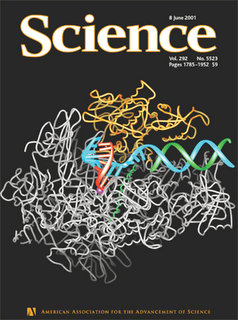
Image from the cover of Science, 8 June 2001.

The Royal Swedish Academy of Sciences has awarded the 2006 Nobel Prize in Chemistry to Roger D. Kornberg, Stanford University, CA, USA for his studies of the molecular basis of eukaryotic transcription.

From the Nobel Prize web site, October 4, 2006:

"Transcription is the process of copying information that is stored in the genes and transferring that code to outer parts of the cell. There it is used as an instruction for protein production. Roger Kornberg was the first to create an actual picture of how transcription works at a molecular level in eukaryotes (organisms whose cells have a well-defined nucleus).

"Transcription is necessary for all life. If transcription stops, genetic information is no longer trans­ferred into the different parts of the body. Since these are then no longer renewed, the organism dies within a few days. This is what happens in cases of poisoning by certain toadstools, since the toxin stops the transcription process. Understanding of how transcription works also has a fundamental medical importance. Disturbances in the transcription process are involved in many human illnesses such as cancer, heart disease and various kinds of inflammation."

Roger Kornberg has published well over 200 research papers, including at least 70 that include transcription in the article title (Science Citation Index, search kornberg rd as author and transcription as topic, limited to title). His papers include many published in Nature, Science, Cell, PNAS, Biochemistry, and dozens of other prestigious journals. All together, his articles have been cited by thousands of other researchers. See these records in SCI, for example:

Cramer P, Bushnell DA, Kornberg RD
Structural basis of transcription: RNA polymerase II at 2.8 angstrom ngstrom resolution.
SCIENCE 292 (5523): 1863-1876 JUN 8 2001

Gnatt AL, Cramer P, Fu JH, et al.
Structural basis of transcription: An RNA polymerase II elongation complex at 3.3 angstrom resolution,
SCIENCE 292 (5523): 1876-1882 JUN 8 2001
An image from the paper co-authored with Gnatt, et al., was adapted for the cover of that issue of Science (shown above).


Tuesday, October 03, 2006

Physics Nobel Prize for Cosmology Based on COBE (Cosmic Background Explorer)

From the Nobel Prize Web site:

The Royal Swedish Academy of Sciences has awarded the 2006 Nobel Prize in Physics jointly to John C. Mather, NASA Goddard Space Flight Center, Greenbelt, MD, USA, and George F. Smoot, University of California, Berkeley, CA, USA, for their discovery of the blackbody form and anisotropy of the cosmic microwave background radiation.


Image: NASA (starchild.gsfc.nasa.gov)

"Their work looks back into the infancy of the Universe and attempts to gain some understanding of the origin of galaxies and stars. It is based on measurements made with the help of the COBE satellite launched by NASA in 1989.

"The COBE results provided increased support for the Big Bang scenario for the origin of the Universe, as this is the only scenario that predicts the kind of cosmic microwave background radiation measured by COBE. These measurements also marked the inception of cosmology as a precise science."

An author search on Mather JC and Smoot GF in Science Citation Index (SCI) results in 17 papers, including Scientific results from the cosmic background explorer (COBE), co-authored with 11 others and published in Proceedings of the National Academy of Sciences 90 (11): 4766-4773 JUN 1 1993.

A later paper, Measurement of the cosmic microwave background spectrum by the COBE FIRAS instrument, coauthored with 21 others and cited 282 times, was published in Astrophysical Journal 420 (2): 439-444 Part 1, JAN 10 1994. It is available in the science library journal stacks.

For a brief introduction to COBE measurements, consult A century of physics by D. Allan Bromley, pp. 103-104. John D. Barrow's book, A history of the universe, provides a more indepth discussion of COBE and the big bang theory.

Monday, October 02, 2006

Andrew Fire and Craig Mello Win Nobel for RNA Interference Discovery

AP Photo/Michael Probst

From National Public Radio:
Americans Win Nobel for Work in Genetic Therapy
This year's Nobel Prize in Physiology or Medicine goes to two American researchers, Andrew Fire of Stanford University and Craig Mello of the University of Massachusetts. The pair discovered how to selectively silence genes that cause disease.
Their work was published in Nature in 1998:
Potent and specific genetic interference by double-stranded RNA in Caenorhabditis elegans, by Fire A, Xu SQ, Montgomery MK, Kostas SA, Driver SE, Mello CC. NATURE 391 (6669): 806-811 FEB 19 1998

As of October 2, 2006, this paper has been cited at least 2,503 times, as per Science Citation Index (SCI). A quick search on "rna interference" or rnai resulted in 7,591 records in SCI and 8,428 records in PubMed.

A more recent paper by Mello coauthored with G. Hutvagner and others [Sequence-specific inhibition of small RNA function] appeared in the open access journal PLoS Biology (Public Library of Science) in 2004. It has already been cited at least 72 times.

A search on "rna interference" in the Encyclopedia of Life Sciences online for background information, especially Gregory J. Hannon's article on RNA Interference (RNAi) and MicroRNAs. There are many books related to the subject accessible through the OhioLINK Library Catalog: do a subject search on RNA and limit your search to items published after 2000 for recent titles.

Friday, September 29, 2006

Celebrate Freedom - Read a Banned Book Today!


This is Banned Books Week (Sept. 23-30). What better way to celebrate than to dip into a scientific treatise that was denounced and banned by the Roman Catholic Church, yet revolutionized human understanding and paved the way for modern astronomy? On the new book shelf now:
Dialogues concerning two new sciences / by Galileo Galilei ; edited, with commentary, by Stephen Hawking. Hawking's initial commentary is a quick and fascinating read, and provides the social context and historical perspective for Galilei's work.

This title is part of On the Shoulders of Giants, which also includes the works of Copernicus, Einstein, Kepler and Newton.

Wednesday, September 27, 2006

Massive Star Forms by Absorption, Not Collison


From Scientific American science news September 27, 2006:

"Astronomers have captured the strongest evidence yet that the growth of high-mass stars occurs by the rapid absorption of hot gas and not by the collision of several smaller stars. Researchers observed a young high-mass star that seems to be pulling in a rotating disk of gas and spraying some of that gas outward in jets, as modeling predicts." Read more at Scientific American.com
Image: M. BELTRÁN AND L. CARBONARO

Two relatively new books in the library provide background information:
From Dust to Stars by Norbert Shulz
and The Origin of Stars by Michael D. Smith. Read all about it!

Friday, September 22, 2006

Women in Academic Science Face Discrimination

From Science News of the Week

U.S. universities foster "a culture that fundamentally discriminates against women," says a new report by the National Academies on the status of women in academic science and engineering. Beyond Bias and Barriers: Fulfilling the Potential of Women in Academic Science and Engineering cites research demonstrating that women are paid less, promoted more slowly, bypassed for honors, and subjected to implicit gender bias from both their male and female colleagues. (Read more.)


A new book in the library might help women address those inequities: Success Strategies for Women in Science - a Portable Mentor. Edited by Peggy A. Pritchard, it was received Sept. 18 and is now on the new book shelf.

Also on the new book shelf is a volume of advice for succeeding beyond the academy: Alternative careers in science - leaving the ivory tower / edited by Cynthia Robbins-Roth. There are many other intriguing titles as well. Check out the new book shelf or browse online.

Thursday, September 07, 2006

OhioLINK Welcomes You to a New School Year

We are part of the amazing and bountiful consortium, OhioLINK. All Oberlin students, staff and faculty have access to this fantastic state-wide collection and superb services. This Welcome to Students from OhioLINK tells more!

It's a partnership.
OhioLINK works with Oberlin College Library to provide you with the books, articles, music, multimedia and other information you need to be successful in your studies. Check out the OhioLINK video, brochure (pdf), or news site for more info.

Research at all hours of the day.
Use the library’s Web site or the OhioLINK site anytime, anywhere to access 45 million library books and other items, millions of electronic journal articles, thousands of e-books, hundreds of educational videos and multimedia. Read more about off-campus access.

Jump start your assignment.
Try Quick Search @ OhioLINK to search multiple library databases at the same time. Quick Search will help you quickly find articles, books and other materials that are acceptable for class and research. For more quick tips on finding books and articles, choosing a database or citing a source, visit OhioLINK's tips for students page.

For all sciences, ISI's Science Citation Index is a great place to begin.

Chat with us! Or IM, email... or come to the library (it's a great place to be).
If you need help finding something, getting started with your research, or you have any questions, chat with an OhioLINK librarian online or visit the science library contact us page.

Tuesday, September 05, 2006

Find a Carrel to Park Your Stuff and Study

Study carrels are available in the science library. Any student is welcome to apply to have a carrel all semester; assignments will be made on September 11 to those who apply between now and then. We'll continue assigning carrels throughout semester, as longs as they are open, but those with the best view of north quad get requested early! More info and application form.